
Last updated November 2, 2026
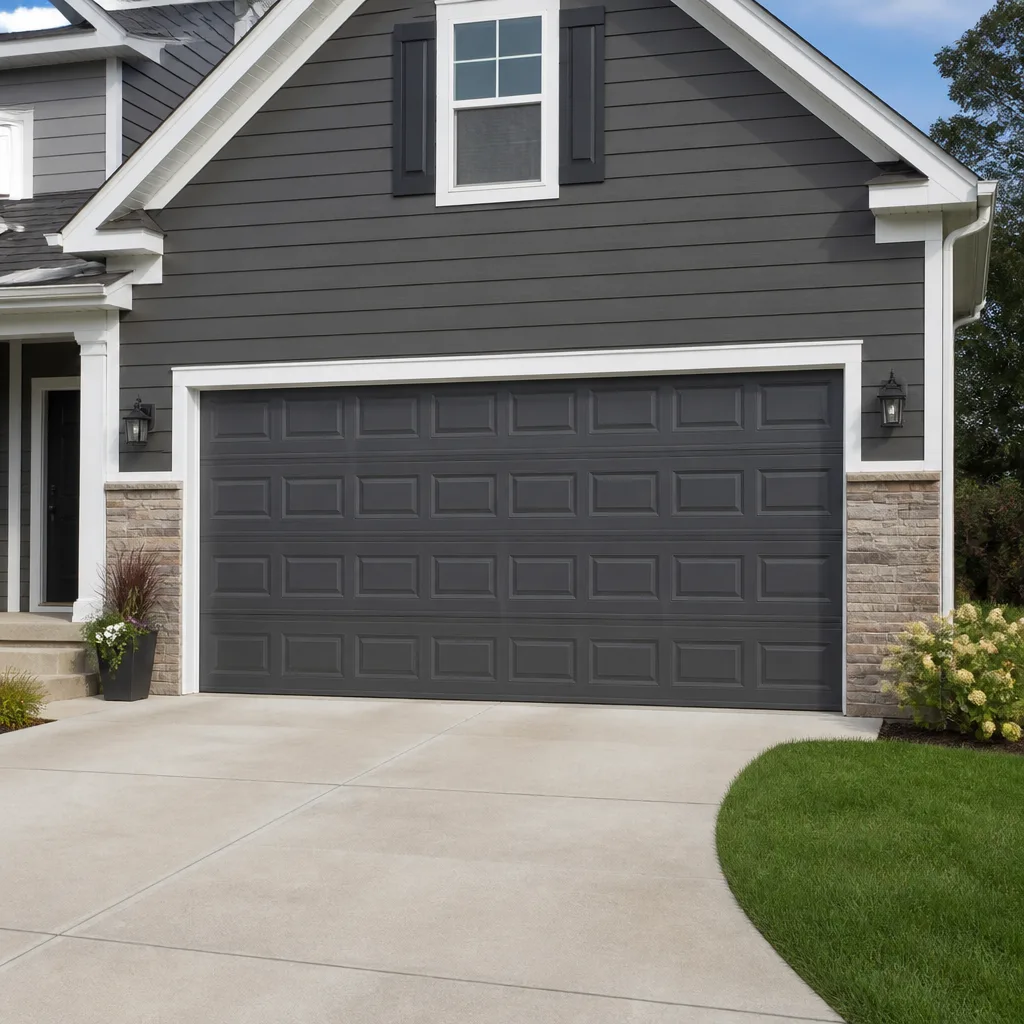 Raised-panel steel
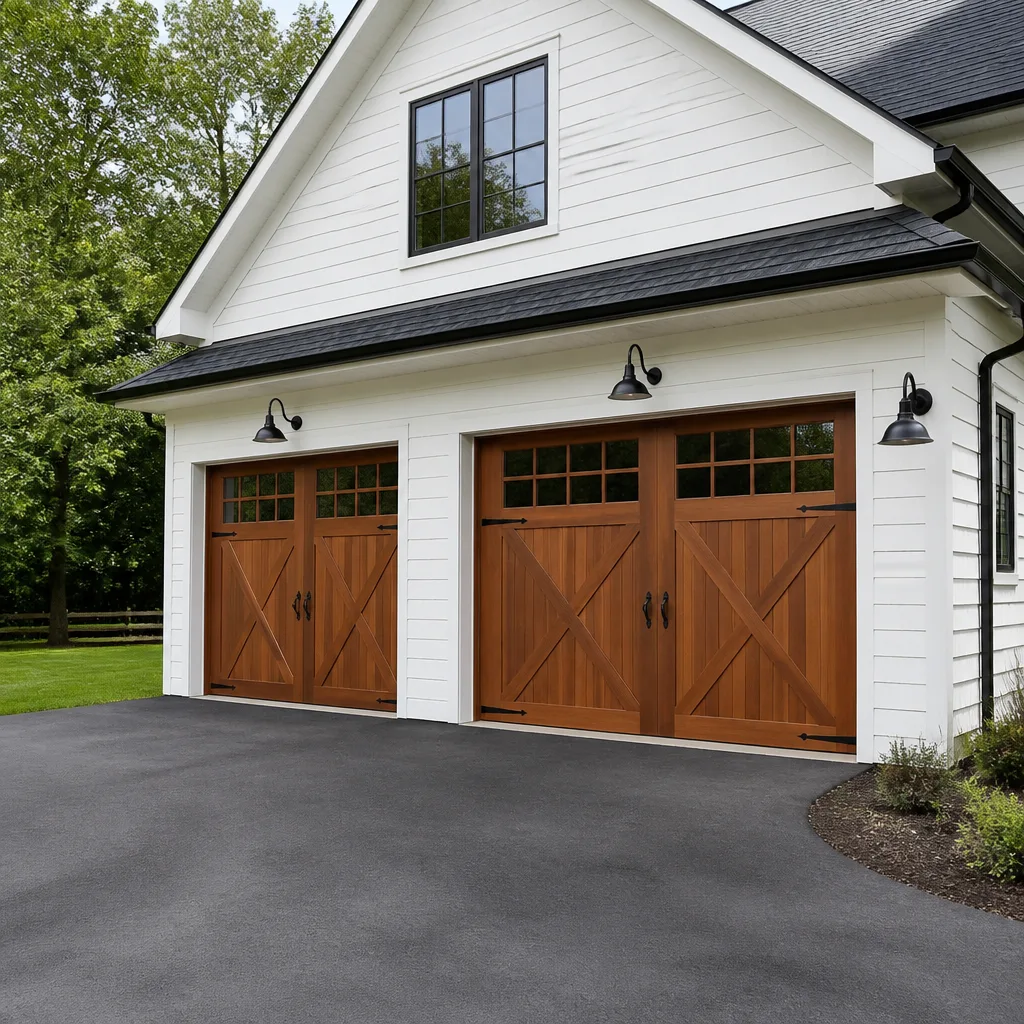 Carriage house
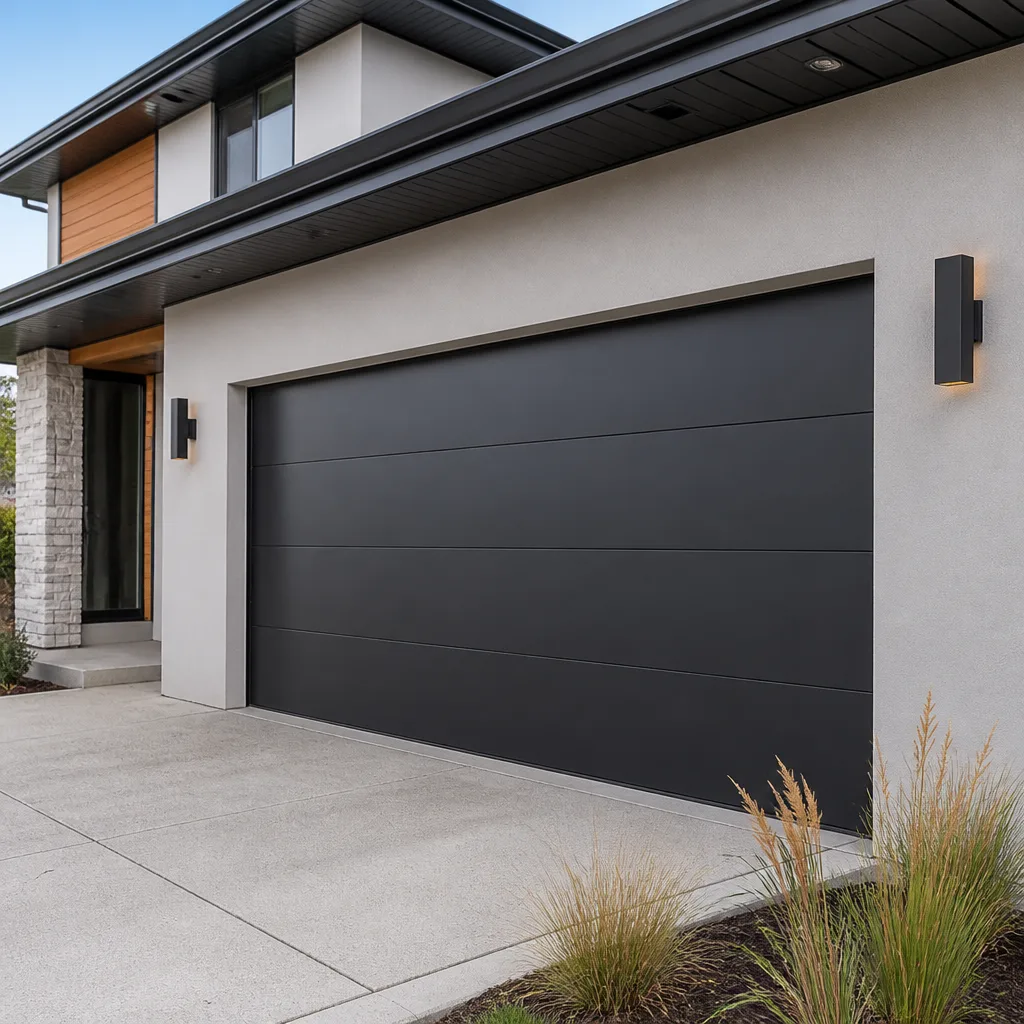 Modern flush
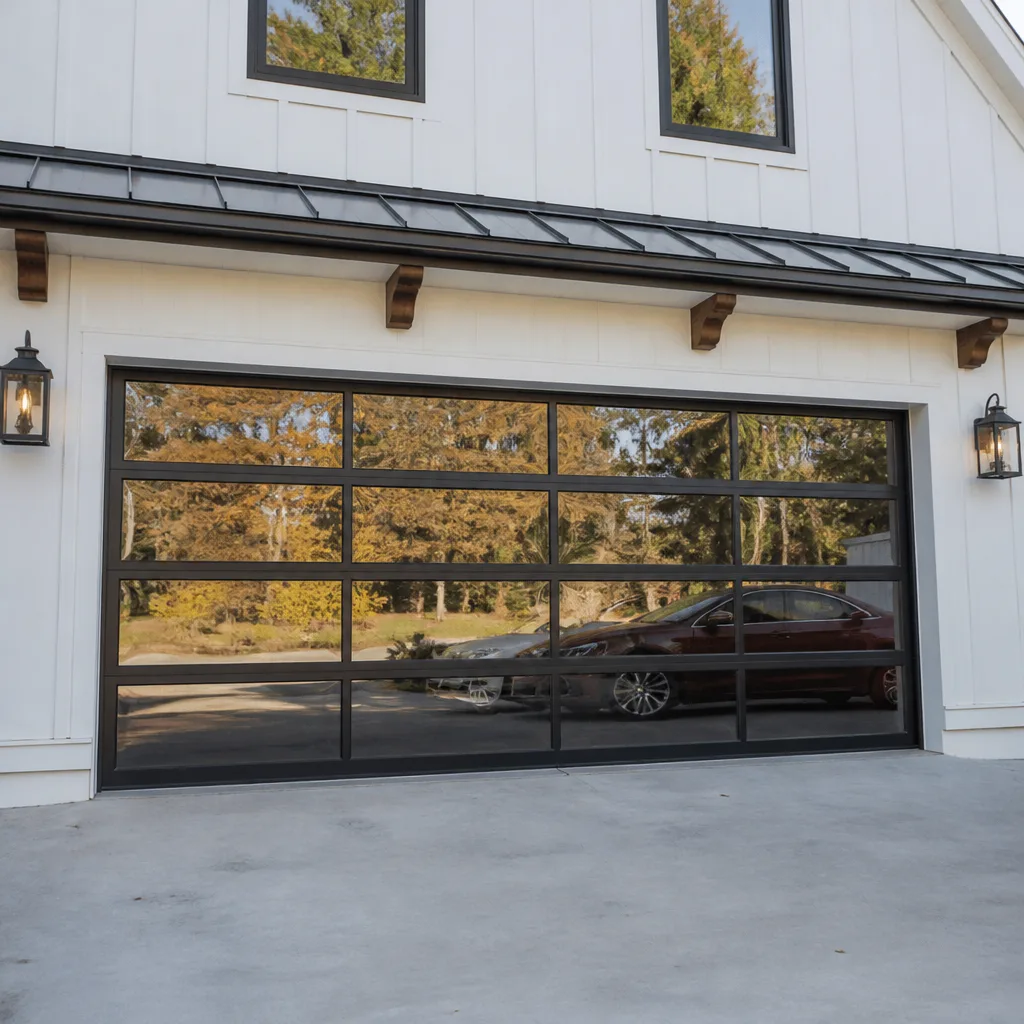 Full-view glass
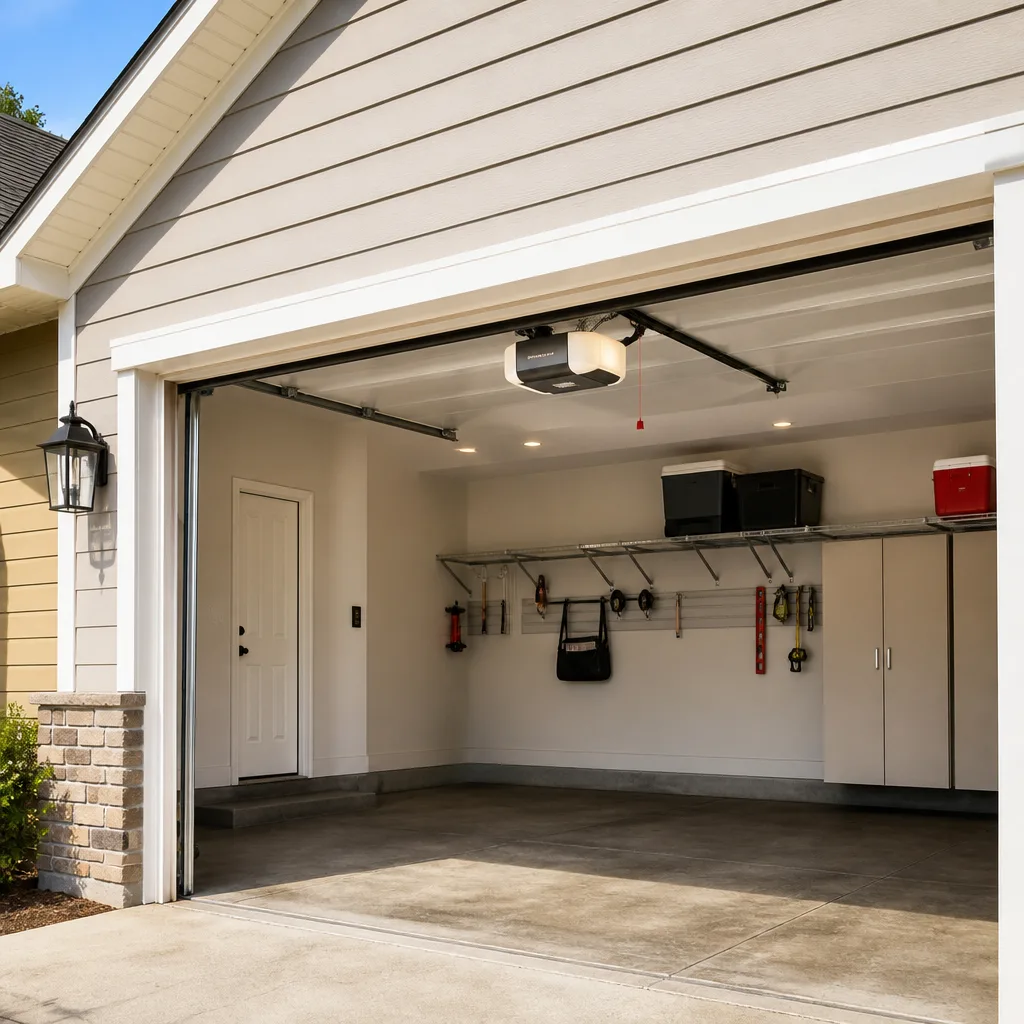 LiftMaster openers
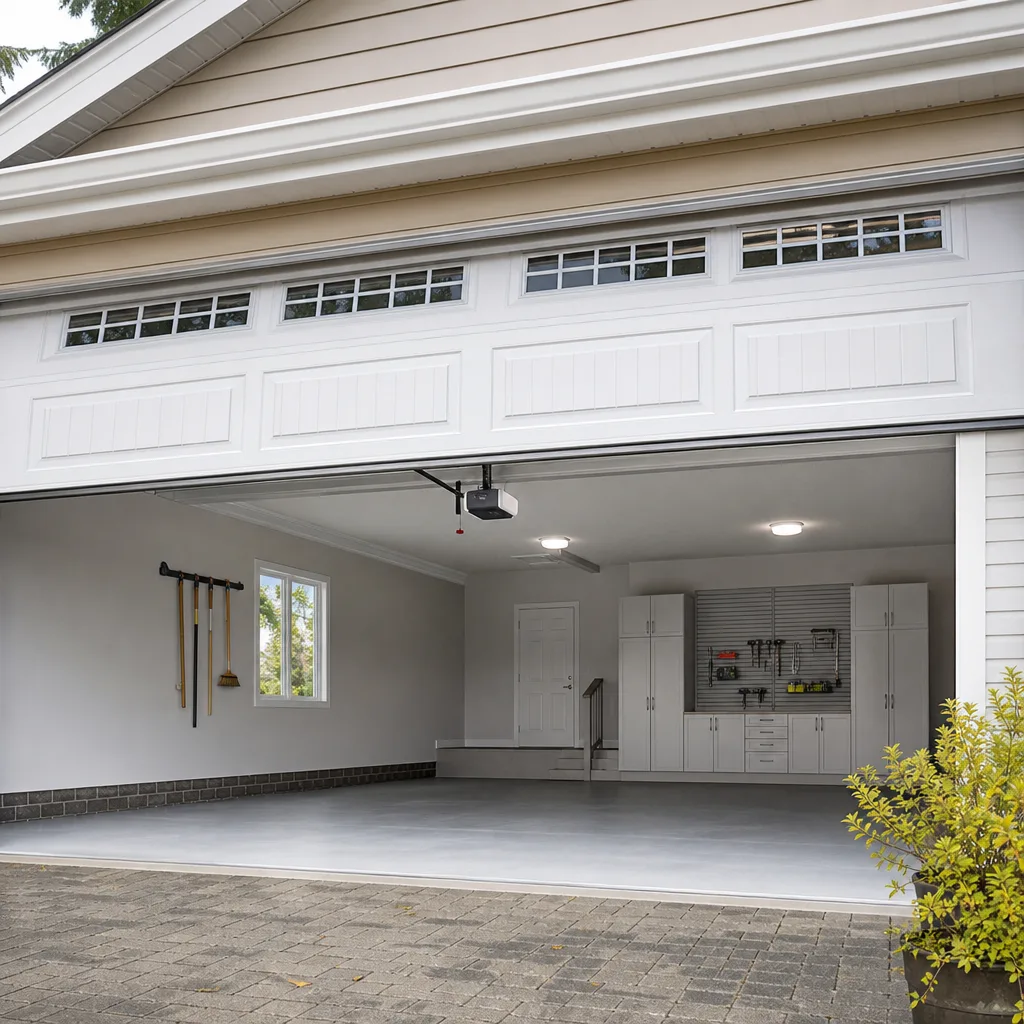 Chamberlain openers
Full 25-point door and opener safety check with every visit - springs, cables, rollers, tracks, and your LiftMaster or Chamberlain opener included
You get a price before we start. It does not change when the truck arrives.
Get your free estimateGarage Door Emergency Preparedness Guide for San Jacinto Homes
Here’s what catches most San Jacinto homeowners off guard: the garage door is the largest moving object in your home, and in this part of Riverside County it doubles as your secondary – sometimes primary – exit point. When the grid fails during a heat wave, which has happened repeatedly across the San Jacinto Valley, a standard opener becomes a dead bolt on a 350-pound door. This guide walks through the three emergency scenarios that actually occur here: power outages during extreme heat, post-earthquake door failures, and windstorm damage.
Quick Answer
Before an emergency hits, you need three things: a functioning manual release mechanism you actually know how to use, a battery backup for your opener or a clear plan for manual operation, and a Garage Door Repair Maintenance Checklist for San Jacinto Homeowners for after seismic events. Homeowners who prepare in advance avoid the panic of being locked out of their car during a power outage or discovering track damage only after attempting to force the door open. This guide covers all three, with a San Jacinto-specific approach to each.
Styles & brands we work with
- Raised-panel steel
- Carriage house
- Modern flush
- Full-view glass
- LiftMaster openers
- Chamberlain openers
The Three Emergencies That Actually Happen in San Jacinto
Garage door failures follow patterns. In San Jacinto, we deal with three primary catalysts: extended power outages, seismic activity, and the windstorms that sweep through the pass. Each one causes different damage, and each one requires a different response. Understanding what you’re likely to face beats a generic emergency plan every time.
The power outages are the most common. When temperatures spike above 105°F and the grid strains, blackouts can last hours or even days. No power means no opener function, and for homes where the garage is the only vehicle exit, that’s a genuine egress problem. Seismic events, even minor ones, shift door tracks and stress spring anchors. And the Santa Ana winds that barrel through the valley each fall can knock out service doors, warp panels, and fill tracks with debris.
How to Manually Operate Your Garage Door During a Power Outage
When the power goes out and your car is trapped inside the garage, the emergency release is your only option. Every opener manufactured by LiftMaster, Chamberlain, Genie, or Craftsman includes one, and the process is nearly identical across all four brands. The release is a red handle hanging from a rope attached to the trolley carriage. Pulling it disengages the opener motor from the door.
Here’s the process, step by step:
- Confirm the door is fully closed. Never pull the release while the door is open or partially open.
- Firmly grip the red handle and pull straight down. You’ll hear a click as the carriage disengages.
- Lift the door manually by the bottom handle. It should raise with moderate effort. If it feels abnormally heavy, the springs may need attention, and forcing it could cause injury.
- Raise the door to full open. If the door drifts back down or falls quickly, the springs have lost tension, and you should stop immediately.
- To re-engage the opener when power returns, pull the release once and run the opener through a full cycle. The trolley will reconnect automatically on most LiftMaster and Chamberlain models.
One mistake we see repeatedly: pulling the release while the door is open. The door can slam down with enough force to bend tracks or damage the bottom panel. Another common error is failing to re-engage the carriage properly, leaving the door unlocked while appearing secure. Always test the opener after power returns by opening and closing the door fully once.
Manual Operation Mistakes That Damage the Trolley Carriage
The trolley carriage is the component that connects the opener’s chain, belt, or screw drive to the door itself. Homeowners routinely damage it in two ways. The first is pulling the release cord at an angle instead of straight down, which bends the release lever. The second is attempting to reattach the carriage manually, which usually strips the gear teeth on models that auto-reconnect.
If you have a belt-drive LiftMaster or Chamberlain opener, the carriage reconnects automatically after running a full cycle. For older Genie screw-drive models, you may need to open and close the door once using the wall button to complete reattachment. We advise against forcing anything. If the carriage doesn’t lock in on the first cycle, run it again before calling for garage door opener repair in San Jacinto. Forcing the mechanism is how a $20 part becomes a $400 repair.
And a note on safety: garage door springs carry extreme tension. They are not a homeowner repair item. If you notice a snapped spring or visible cable damage during any emergency, leave the door alone and call a professional. The same applies to cables that have jumped the drum. Attempting a fix without the proper winding bars and training can cause serious injury.
Post-Earthquake Inspection: What to Check Before Operating Your Door
After any seismic event strong enough to rattle windows, you need to inspect your garage door before pressing the opener. Even minor earthquakes in the San Jacinto Valley can shift tracks by a quarter inch, which is enough to cause binding, cable derailment, or a door that jams midway. This inspection takes about three minutes and prevents the most expensive form of earthquake damage: forcing a misaligned door through damaged tracks.
Inspect the following before operating the opener:
- Track alignment: Look at both vertical and horizontal tracks. They should be straight, with no obvious bends or gaps where bolts have loosened. Run your hand along the track (when the door is closed) to feel for dents or debris.
- Spring anchor integrity: Check the torsion spring above the closed door. The anchor bracket should be firmly attached to the header with no visible movement or wall cracking.
- Cable condition: Both lift cables should sit snugly in the drum grooves on either side. A slack cable or one that’s visibly off the drum means the door must not be operated.
- Roller and hinge alignment: Check that rollers remain in the track, and hinges are not bent or missing screws. A pulled hinge screw often signals that the door section itself shifted.
- Door balance test: Disengage the opener using the release handle and lift the door manually to about waist height. The door should stay in place. If it drops, the springs have been compromised. Lower it back slowly and call for service.
- Frame attachment: In severe events, the track mounting brackets can pull from the wall or ceiling. If any bracket is loose, do not operate the opener.
If all checks pass, run the door through one full open/close cycle and listen for grinding, squealing, or unusual resistance. Any abnormal sound after an earthquake is a signal to stop. Serving homes across San Jacinto, we’ve seen the pattern: the homeowner who forces a jammed door after an earthquake ends up with a full track replacement instead of a simple realignment.
Battery Backup Openers: What Actually Works for Extended Outages
A battery backup opener is the single best investment for San Jacinto homeowners who use their garage as primary vehicle storage. When the grid fails during a heat event, a backup opener lets you enter and exit normally. But not all backup systems are equal, and there are honest differences between brands.
LiftMaster and Chamberlain (same parent company) currently offer the most reliable backup systems. Their newer models include an integrated battery that powers the opener for 20-50 cycles depending on the model. Genie offers standalone backup units that connect to existing openers, which is a practical option for homeowners not ready to replace a functioning opener. The important distinction is cycle count, not days: a heat-event outage of 8-12 hours uses 3-6 cycles for the average household. A backup rated for 20 cycles covers that comfortably. One rated for 10 cycles might not.
For homes with an existing opener and no battery backup, a retrofit option is sometimes possible. We recommend checking whether your specific model supports a backup battery before purchasing anything. Some Chamberlain and LiftMaster units accept a plug-in backup battery that installs in under 30 minutes. Others require a full opener replacement to add backup capability.
One important reality: battery backup openers still operate the door using the same motor and drive system. If your door’s springs are worn or the door itself is heavy due to age or panel weight, the backup system works harder and drains faster. If you install a backup battery as part of a broader opener service, the technician should verify that the door is properly balanced first. An unbalanced door kills backup batteries quickly.
How to Secure a Garage Door From the Inside When the Opener Fails
There’s a less obvious scenario: your opener fails, a service call is scheduled, but you need to leave the home before the technician arrives. Most people simply close the door manually and leave through the front door, assuming the garage is secure. The problem is that a disconnected door with an open release mechanism can often be lifted from the outside by about an inch, enough for a pry bar or hook to slide underneath.
Here’s how to actually secure a door after the opener fails:
- Disengage the opener if it hasn’t failed electrically and the door is moving on its own. Pull the release and lower the door fully closed.
- Insert a padlock or bolt through the track. Most garage door tracks have holes that accept a long-shackle padlock on each side. This physically prevents the rollers from moving upward.
- Slide a piece of metal stock or a length of wood into the track opening about 6 inches above the top roller. Vinyl-coated wire rope works as well and won’t scar the track.
- Check the emergency release is disconnected but the door is down. A lifted door with the release pulled is the least secure state a garage door can be in.
- Lock the pedestrian side door (if equipped) and deadbolt it from the outside.
For homes without a side entry or pedestrian door, the track lock is the only interior security option. We’ve seen homeowners thread a broom handle through the track opening as a temporary measure, and while it works in a pinch, a $20 padlock stores the same amount of energy without snapping when someone tries to lift the door. A wooden handle breaks under door weight. A steel padlock doesn’t.
Battery Backup Options at a Glance
- Integrated backup (LiftMaster, Chamberlain): Battery built into the opener motor housing. 20-50 cycles, recharges automatically when power returns. Best for new installations and full opener replacements.
- Standalone backup unit (Genie, some third-party): Connects to an existing opener, providing 10-25 cycles depending on model. Practical for retrofit situations.
- Uninterruptible power supply (UPS): A large computer-grade UPS can run some openers for a few cycles. Not recommended as a primary solution; openers draw significant amperage, and most UPS units are undersized for the task.
- Manual operation plan: Costs nothing. Requires a functional emergency release, a balanced door, and practice. Everyone should have this as a fallback regardless of battery equipment.
What to Do When the Door Comes Off Track During an Emergency
A door that comes off its track is one of the most intimidating garage door failures, and it’s also one where panicked homeowners cause the most additional damage. If the door wedges itself halfway open, the reaction to push or pull it back into place is strong. Here’s why you shouldn’t: a door with cables still attached and springs under tension is holding stored energy. Forcing it compounds the damage and can break cables, bend multiple panels, or pull the track from the header.
The safe interim fix, when conditions allow:
- Do not operate the opener. Unplug it if possible.
- Assess whether the door is stable in its current position. If it appears loose or in danger of falling, stay clear and call immediately.
- If the door is resting on the ground or jammed at a slight angle and doesn’t appear to be under spring-loaded movement, you may attempt to secure the area by blocking the opening with a vehicle or furniture.
- Do not attempt to re-seat the door in the tracks. A door coming off track usually indicates a bent track, broken roller, or cable failure, and re-seating without addressing the cause means it will come off again, often with more force.
- Call a technician. This is a situation where the cost of waiting pale against the cost of a door that collapses on a car, or worse, a person.
In our experience in San Jacinto, off-track doors most often originate from two conditions: broken cables that let one side drop faster than the other, and rollers that have worn to the point of leaving the track during heavy wind loads. Both require parts replacement and track realignment. Neither is a homeowner project.
See the difference
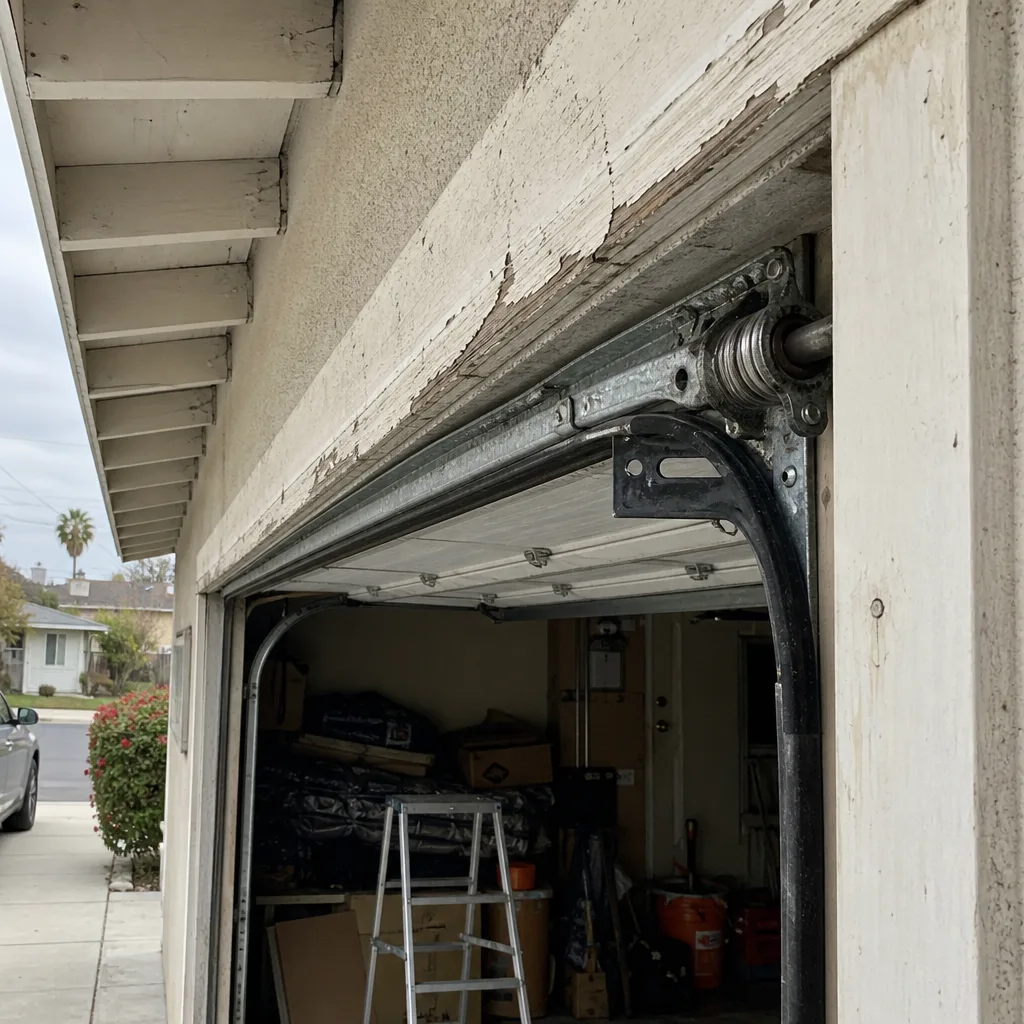 Before
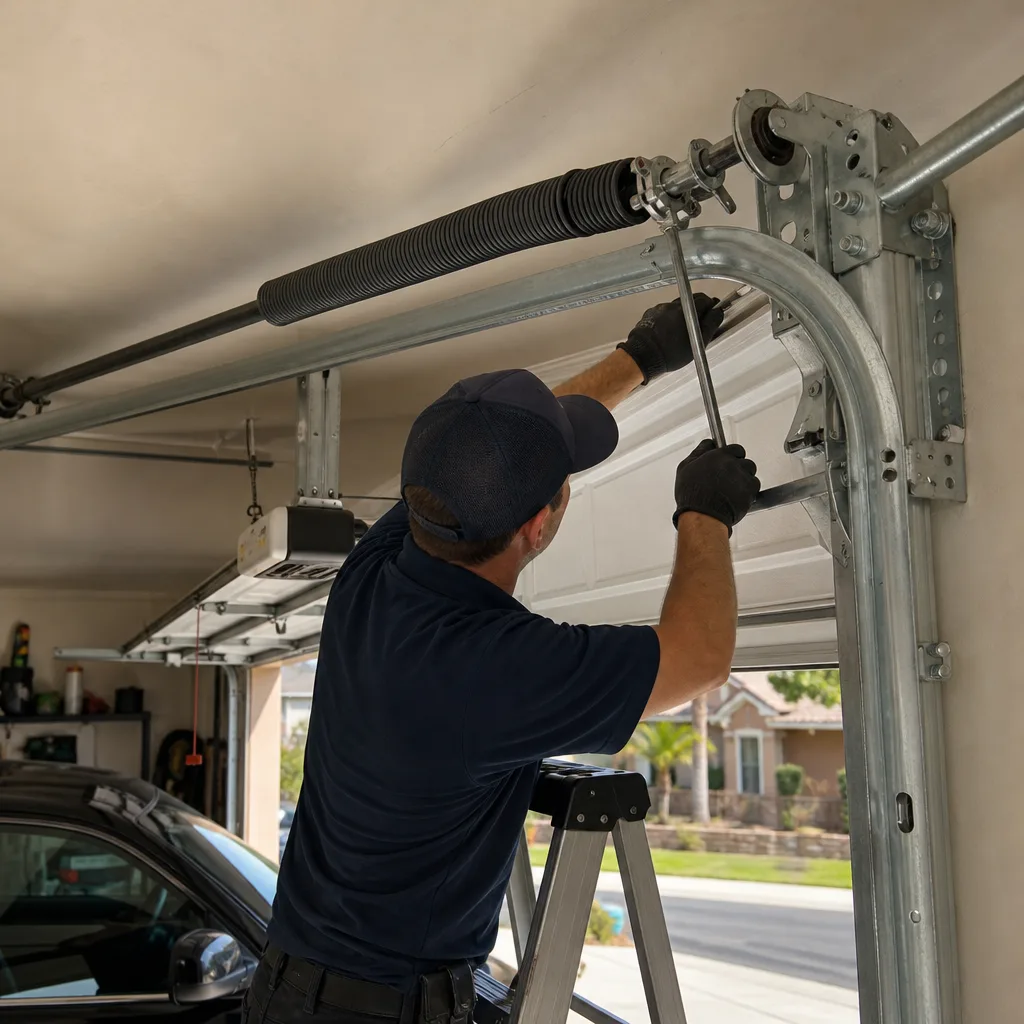 After
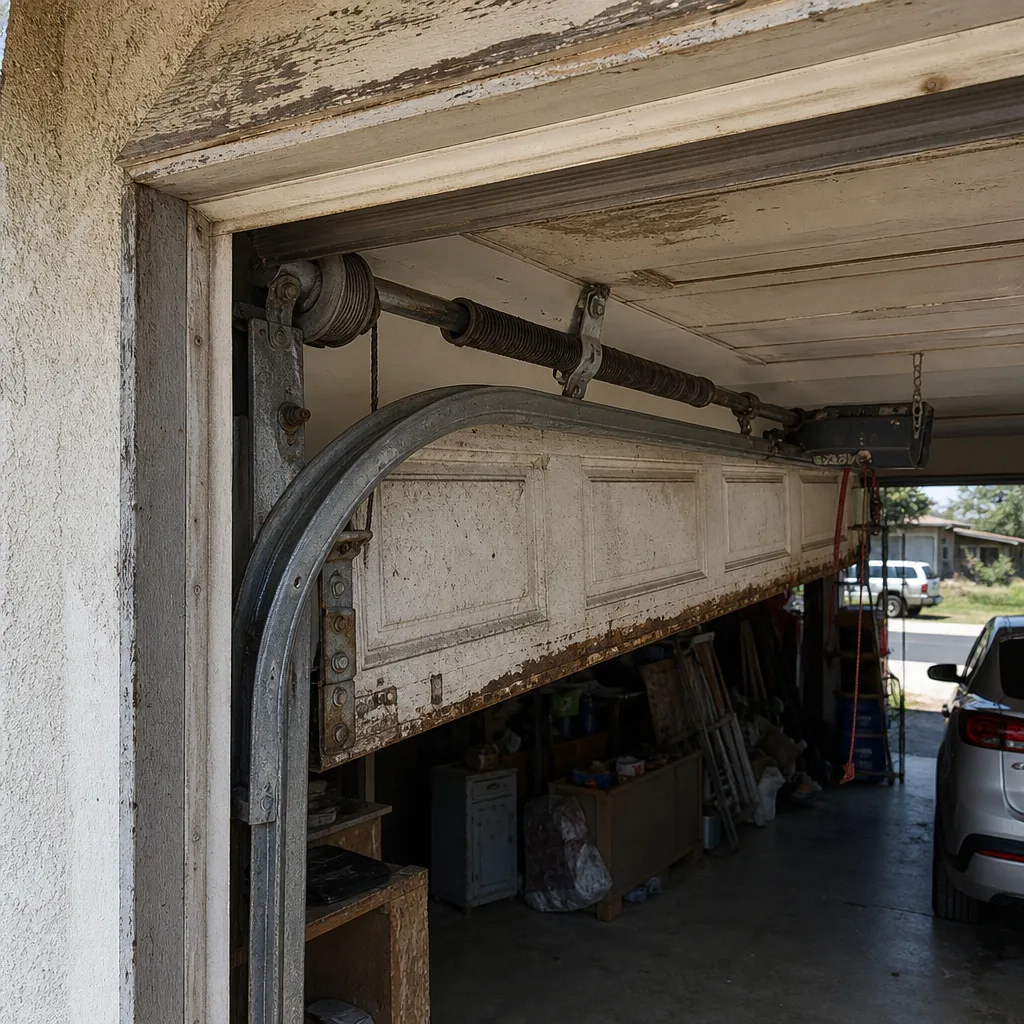 Before
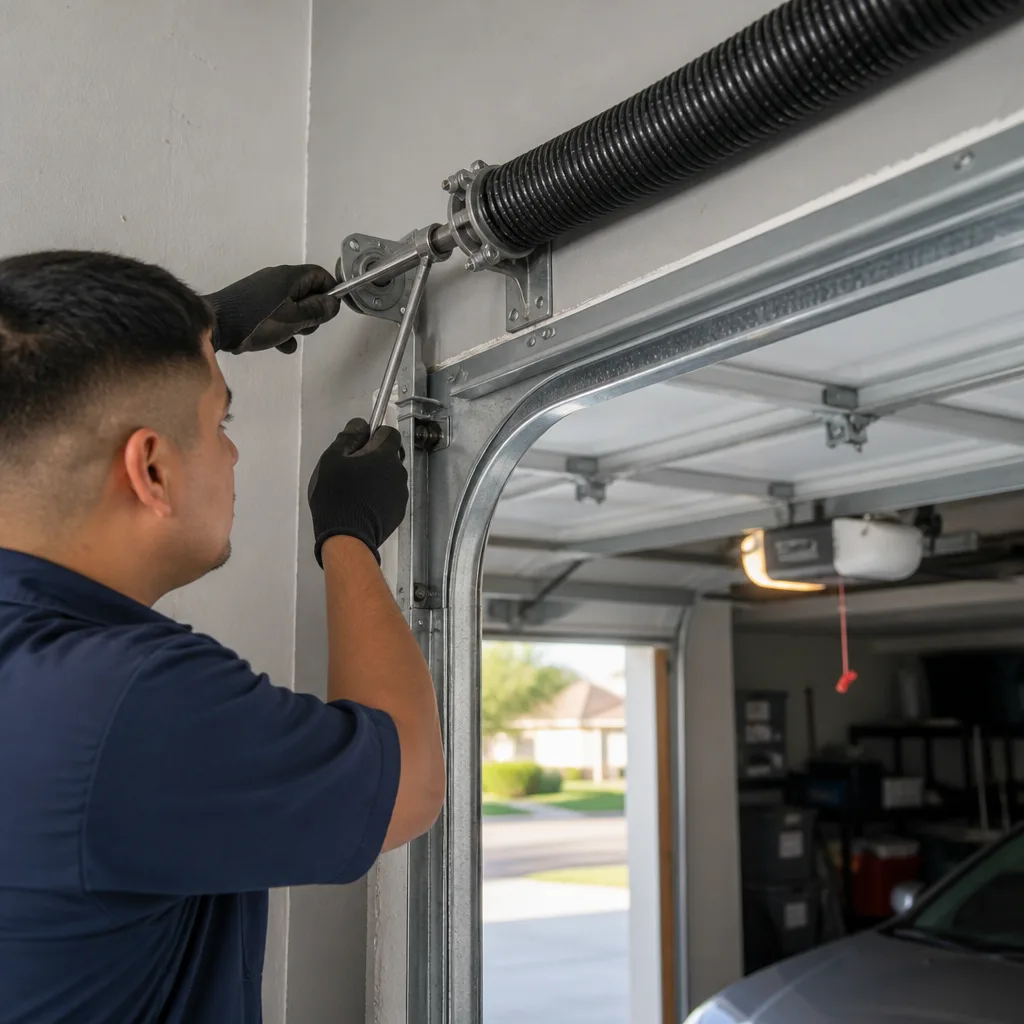 After
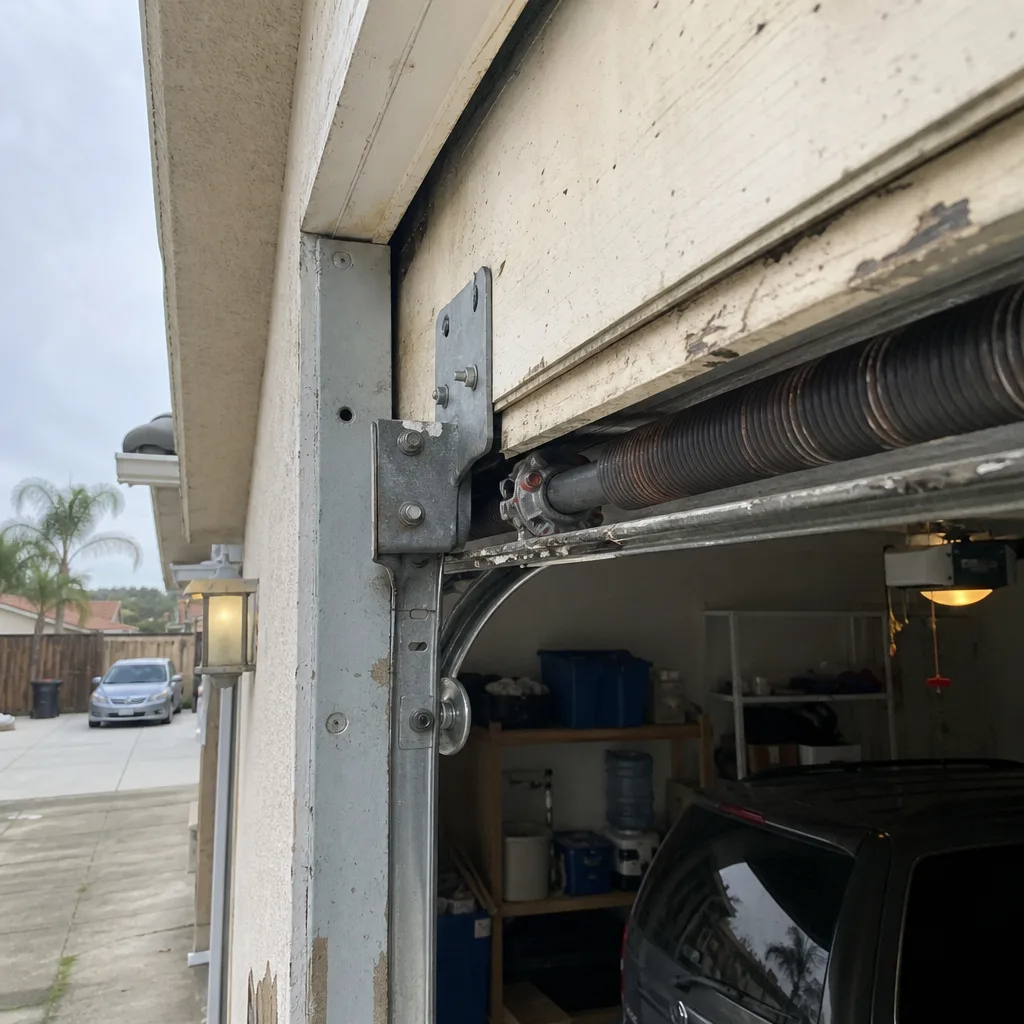 Before
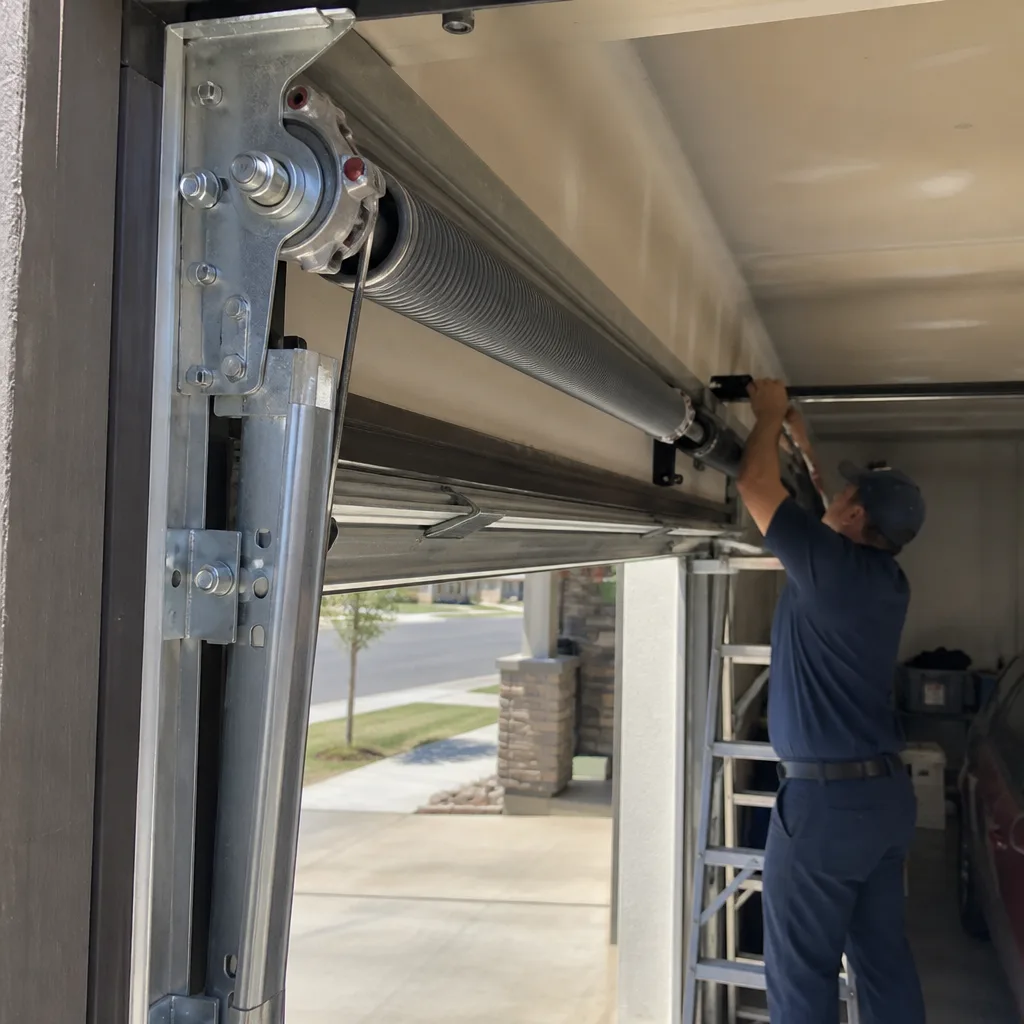 After
Spring Breakage: The Most Misunderstood Emergency
When a torsion spring snaps, it sounds like a gunshot inside the garage. The door won’t lift, even manually, because the spring provides the counterbalance for the door’s weight. A 16-foot double door weighs 250-350 pounds. Without a functioning spring, that’s the weight you’re trying to lift from the bottom handle.
Every home in San Jacinto with a garage opening and closing more than 12 times a day (typical for working families) will experience a spring failure within 7-12 years. The springs are wear items, rated for 10,000 cycles on standard models and 20,000 cycles on upgraded versions. When one fails, both should be replaced. Here’s why that’s not an upsell: if one spring has reached the end of its service life, the other is in the same condition. Replacing only the failed spring means the door operates with mismatched tension, which causes premature roller wear and uneven stress on the opener.
The safety caveat bears repeating because it’s the single most dangerous component in the garage door system. Torsion springs hold hundreds of pounds of torque. Replacing them requires special winding bars, a solid grasp of spring geometry, and the right replacement specifications. Attempting a spring replacement without training has resulted in serious injuries. This is a call-a-professional situation, full stop. A technician arrives, measures the door weight and height, installs matched springs, and verifies balance before leaving. The job takes about an hour for an experienced specialist.
Osprey Garage Door Repair works on doors from Clopay, Amarr, Wayne Dalton, Raynor, and the other major brands. Every one of them uses the same basic torsion spring principle, and every one of them benefits from replacing springs in pairs. If you hear a loud bang from the garage and your door won’t budge, call us. We’ll quote the spring replacement price before any work starts, and the figure is agreed to in advance.
San Jacinto-Specific Factors That Affect Your Door’s Emergency Readiness
Your garage door faces conditions that differ from coastal California or the mountains. San Jacinto sits in a high-heat valley environment. Summer temperatures regularly exceed 100°F, and garage interiors get significantly hotter. That heat affects the door in three ways: metal tracks expand and can shift slightly, nylon rollers degrade faster under sustained heat, and steel panels absorb thermal load that transfers to the hinges and springs.
The wind is another San Jacinto constant. Afternoon gusts through the valley in the fall and winter months push against wide door surfaces. A 16-foot door is effectively a sail. Wind loads test the track brackets, the roller engagement, and the spring tension. Doors in San Jacinto that have never had their track brackets re-torqued since installation often show the effects in loose hardware and rattling operation.
We also see homes throughout the San Jacinto Valley built at different points over the past 40 years, from older tract developments near the Ramona Expressway to newer construction in the hills. The older doors in these areas are frequently uninsulated, heavy, and fitted with openers that were installed before smart-home integration became common. If your home predates the early 2000s, your opener and springs both deserve a condition assessment before heat-event season arrives. The Osprey Garage Door Repair home philosophy is straightforward: we work on the brand you already have, and a quick inspection costs less than an emergency repair.
Why Brand Familiarity Matters During an Emergency
When a garage door fails during a power outage, earthquake, or windstorm, the last thing you want is a technician spending 30 minutes on a learning curve because they don’t recognize the system in front of them. Garage doors and openers vary substantially across brands in their release mechanisms, carriage designs, and spring configurations. A technician who services LiftMaster and Chamberlain daily will diagnose a Chamberlain failure faster than a generalist who sees one every few months.
This is the case for working with a dedicated garage door repair specialist in San Jacinto. Osprey technicians work on door and opener systems from the eight industry leaders: LiftMaster, Chamberlain, Genie, Clopay, Amarr, Wayne Dalton, Craftsman, and Raynor. That’s not a list engineered for marketing; it’s the standard set of brands found in Southern California garages, and knowing all eight means we show up already familiar with the equipment. Your opener, your brand, our expertise.
Brand familiarity also matters for parts availability. A snapped spring on a Raynor door is not interchangeable with a spring from a Clopay door, even when both are 16-foot doubles. The spring specifications differ, and installing a mismatched spring changes the door’s balance, strains the opener, and shortens the life of both components. When the technician arrives with the correct parts on the first visit, the door is back in service the same day. When they don’t, you’re waiting for a second appointment.
Seasonal Preparation: A Simple Checklist for San Jacinto Homeowners
Emergency preparedness works best as a seasonal habit. Twice a year works well in this climate: once in late spring before the extreme heat arrives, and once in mid-fall before the windstorm season peaks. Each check takes under 20 minutes and catches most of the issues that lead to emergency failures.
Your spring inspection:
- Run the door through a full open/close cycle and listen for grinding, squealing, or hesitation.
- Disengage the opener and lift the door manually. It should raise smoothly and stay at waist height.
- Visually inspect both springs for gaps, rust, or separation.
- Check that all hinge and bracket bolts are tight (gently, with a socket wrench).
- Test the safety sensors by waving a broom handle through the beam while closing. The door should reverse.
- Inspect the emergency release handle for rust or stiffness, and pull it once to confirm it works.
Your fall inspection adds a few wind-specific items:
- Look for gaps between the door and the weatherstripping on either side. Gaps admit debris and wind pressure.
- Check the bottom seal for cracks or detachment. A compromised seal lets dust and wind-driven grit into the track.
- Inspect the track mounting brackets where they attach to the wall and ceiling. Look for movement, especially on the horizontal section.
- Clear the track channels of any accumulated leaves, spider webs, or debris.
- If you have a battery backup, test it by unplugging the opener and cycling the door.
These checks prevent about 80% of the emergency calls we see. The remaining 20% are genuinely unpredictable: springs snap, gears strip, and seismic events cause sudden track shifts. But a door that passes a seasonal inspection is far less likely to fail dramatically, and it’s far easier to repair when it does.
Common Mistakes to Avoid
- Pulling the emergency release with the door open. The door can drop with enough force to bend tracks, shatter the bottom panel, or injure a person underneath. Always ensure the door is fully closed before disengaging.
- Forcing a door that won’t move. If the door doesn’t lift smoothly after disengaging the opener, forcing it stresses the springs, cables, and hinges. Stop and call for service. Forcing the issue turns a simple repair into a multi-part emergency.
- Attempting spring replacement as a DIY project. Torsion springs carry enough stored energy to cause severe injury. This is not a YouTube-project situation, and no amount of caution substitutes for proper tools and training.
- Re-attaching the trolley carriage manually. Modern LiftMaster and Chamberlain openers are designed to re-engage automatically. Manually forcing the carriage can strip the gear teeth and require opener rebuild work.
- Neglecting the battery backup because “the power never goes out for long.” San Jacinto heat events have produced outages lasting several hours. A backup battery is the difference between driving to work and calling out from your driveway.
- Skipping post-earthquake inspection. Even a minor quake can shift tracks a small but critical amount. Running the door once on shifted tracks can cause permanent damage that would have been a $50 adjustment.
- Replacing only one spring when both are due. Wear is synchronized. Mismatched springs create uneven balance, premature roller failure, and additional stress on the opener. Replace both.
When to Call a Professional
Call a garage door professional if you find a snapped spring, visible cable damage, a door that’s come off track, or a track that’s visibly bent (see our guide on Garage Door Permits, Codes & Inspections in CA: What You Need to Know for related requirements). Call after any earthquake if the door binds, scrapes, or refuses to stay balanced. Call if your battery backup fails during testing and you want it replaced or retrofitted. And call for a seasonal inspection if you’ve never had one or the door is older than 15 years. Osprey Garage Door Repair offers free estimates in San Jacinto, and the price is always quoted and agreed to before any work starts.
Frequently Asked Questions
Pull the red emergency release cord hanging from the trolley carriage while the door is fully closed. Then lift the door manually by its bottom handle. If it feels excessively heavy or drops back down, the springs may be compromised, and you should call for service.
If your opener was installed after 2018 and is a mid-range or higher LiftMaster or Chamberlain model, it may include an integrated battery. You can verify by looking for a battery icon on the wall console or checking the opener model number against the manufacturer’s spec sheet.
Check the track alignment, spring anchors, cable seating, roller engagement, and door balance. If the door lifts smoothly and stays at waist height when disengaged, it’s likely safe to operate. If you see any visible damage or the door binds, keep it closed and call a technician.
Yes. Close the door fully, then insert a long-shackle padlock through the track hole on either side of the door. This physically prevents the rollers from moving up. A steel rod or piece of metal stock through the track opening also works as a temporary measure.
Spring replacement for a standard 16-foot double door typically ranges from $180 to $340 depending on spring rating, door weight, and access. Both springs should be replaced together. Call for an exact quote; the price is locked before any work begins.
No. Osprey Garage Door Repair quotes a firm price before any work starts, based on the door’s size, weight, and the specific spring specifications. If the door has additional damage discovered during the repair, any additional work is discussed and quoted separately before proceeding.
The Bottom Line
Garage door emergencies in San Jacinto fall into predictable patterns: power outages, earthquake damage, and wind-related failures. Preparing for these is not complicated. Know how to operate your manual release. Test your battery backup. Inspect your door after every seismic event. Replace springs in pairs when they fail. And have a plan for securing the door when the opener is down. The preparation takes less than an hour twice a year, and it makes the difference between a minor inconvenience and a major bill, a missed day of work, or a genuine safety problem. For more guides & resources, or for the situations you can’t prepare for, a specialist who knows your brand and your system is a phone call away.
Garage door installation in San Jacinto is a related consideration if your door is 20+ years old and facing recurring problems. A new door with modern safety features and a battery backup opener may be the better long-term investment compared to piecemeal repairs on aging equipment.
If you need emergency service, call (866) 883-7857 for a free estimate in San Jacinto and the surrounding valley.
Written by the team at Osprey Garage Door Repair, serving San Jacinto since 2011.