
Last updated November 2, 2026
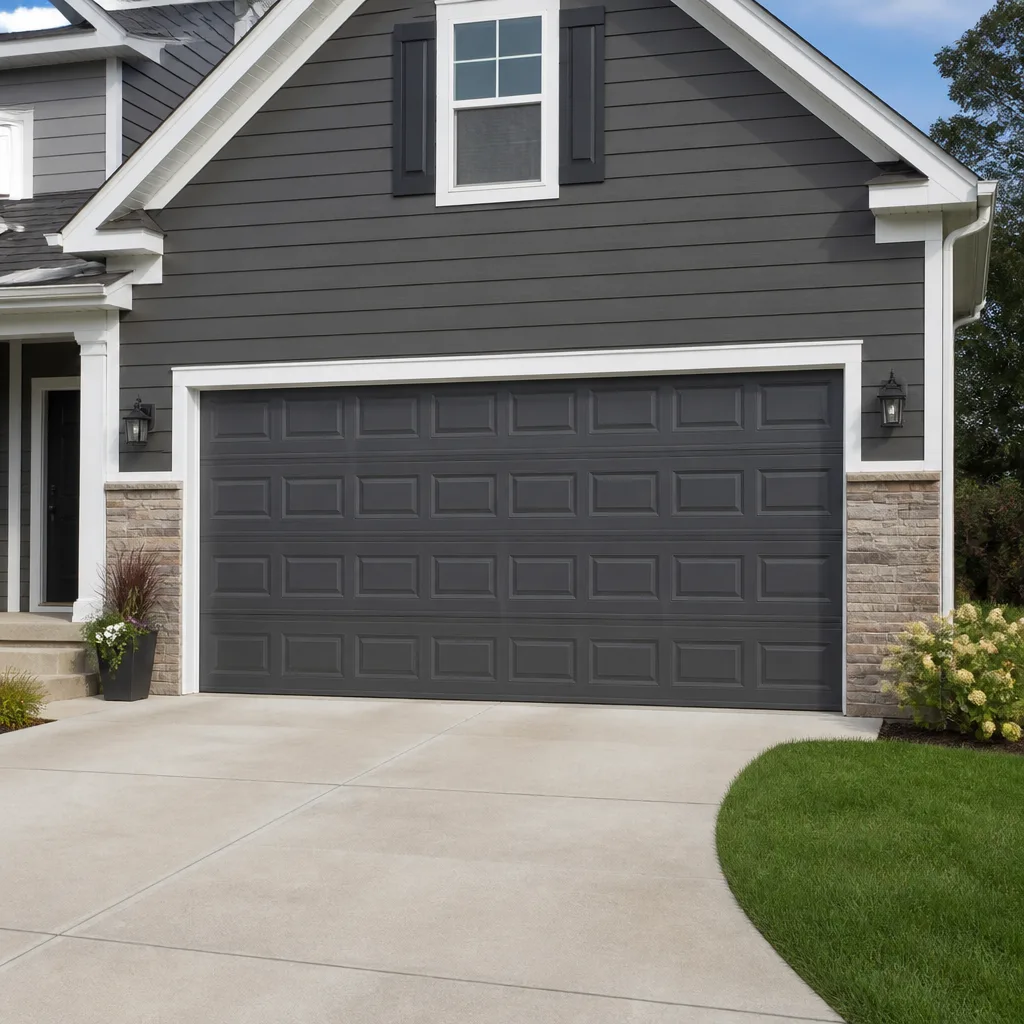 Raised-panel steel
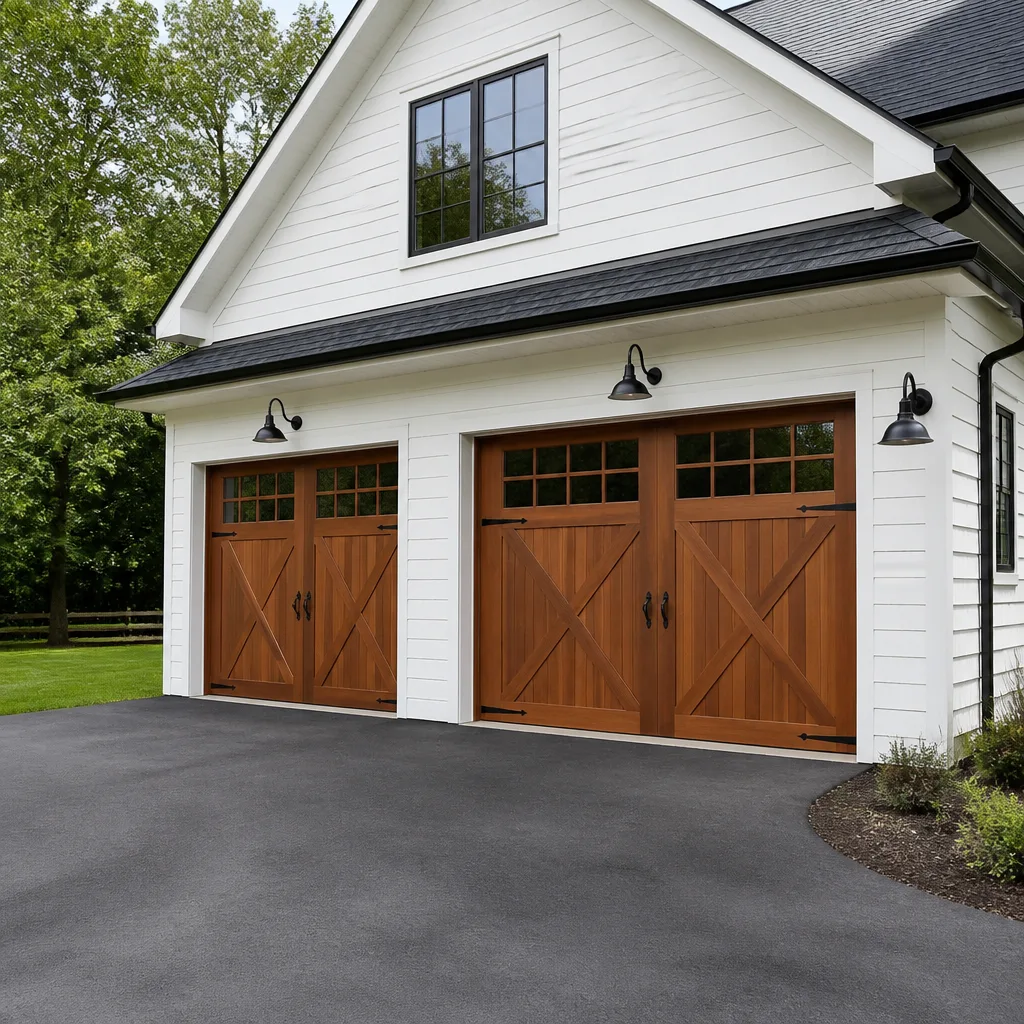 Carriage house
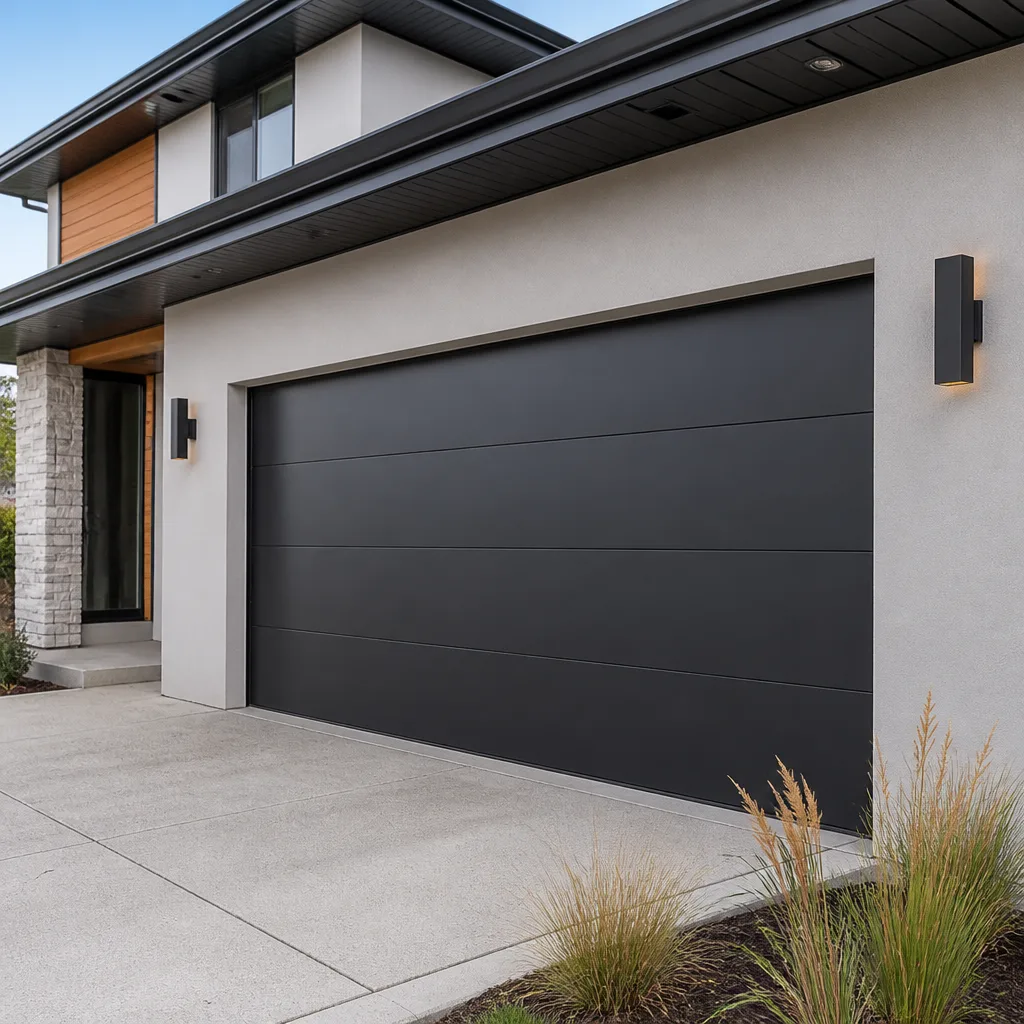 Modern flush
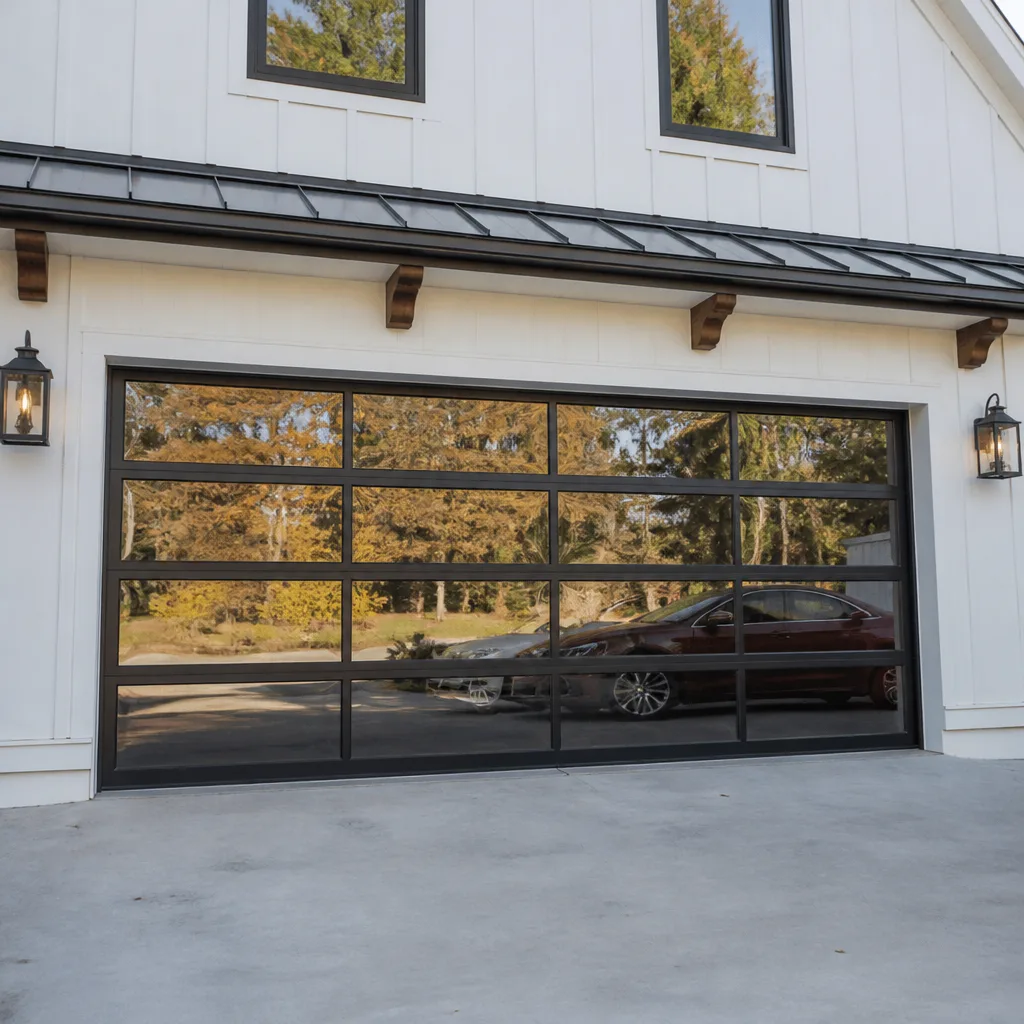 Full-view glass
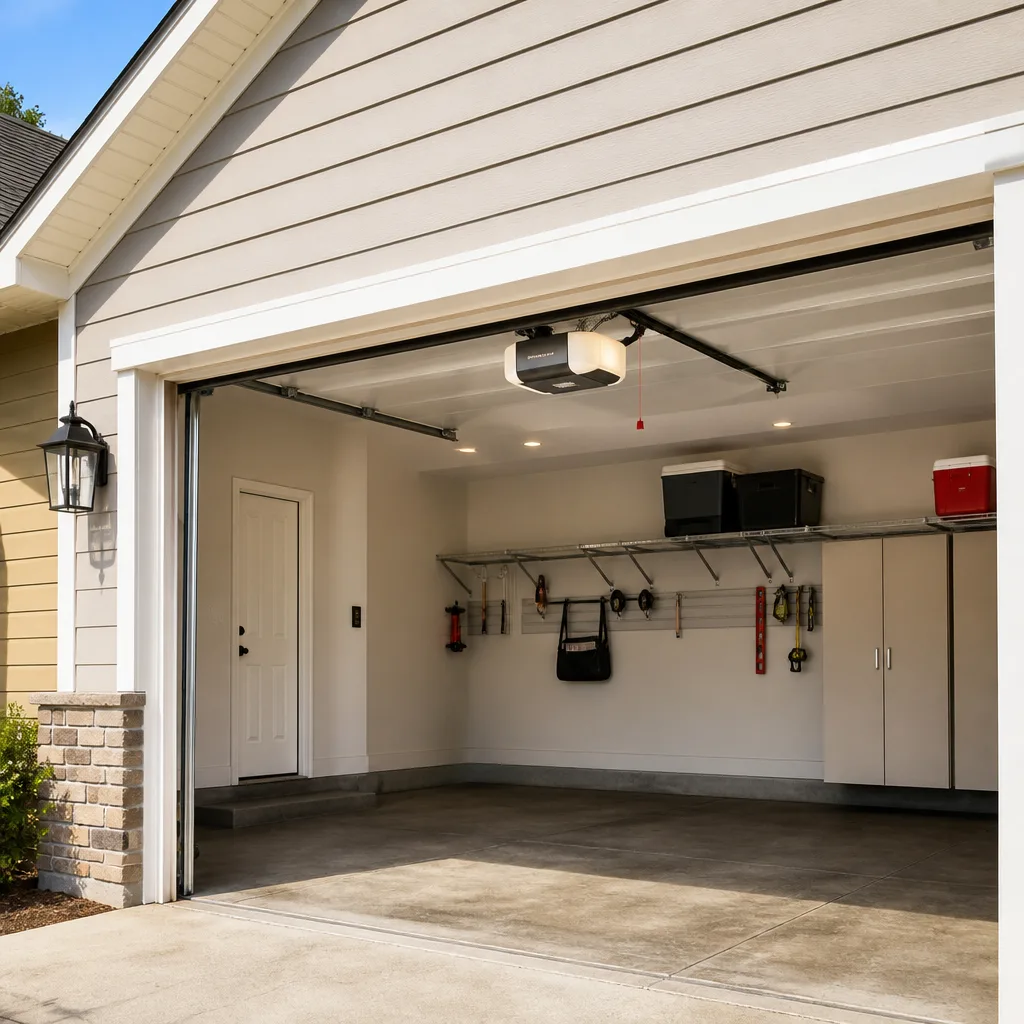 LiftMaster openers
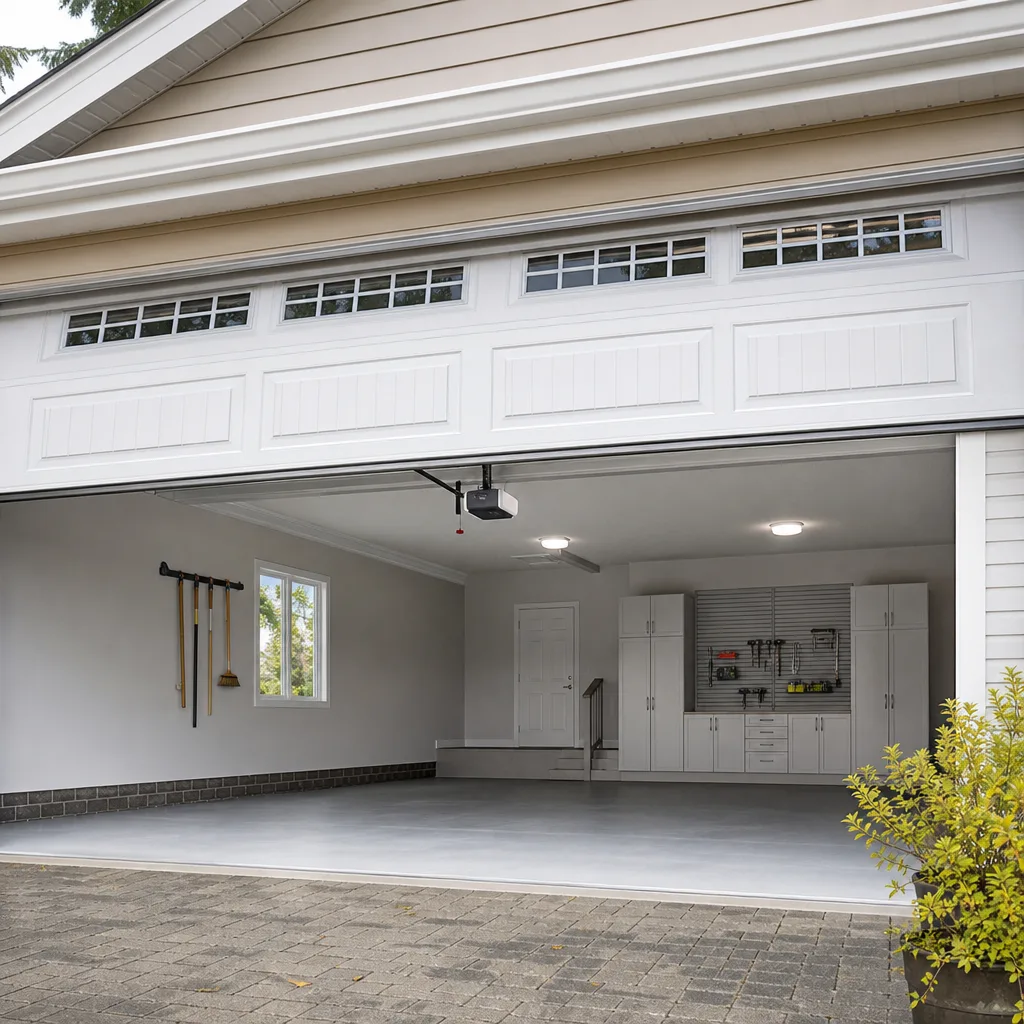 Chamberlain openers
Full 25-point door and opener safety check with every visit - springs, cables, rollers, tracks, and your LiftMaster or Chamberlain opener included
You get a price before we start. It does not change when the truck arrives.
Get your free estimateDIY vs Professional Garage Door: The San Jacinto Homeowner’s Decision Guide
A garage door torsion spring under full tension holds roughly 100 to 150 pounds of torque per spring. When that tension releases unexpectedly, it releases in a fraction of a second, sending a metal cone and winding bar flying with enough force to fracture bone. That’s not a warning label on a package. It’s the physics every San Jacinto homeowner should understand before reaching for a wrench. The DIY vs. professional question isn’t about how handy you are. It’s about which tasks respect that stored energy and which ones don’t. Over the next few minutes, we’ll categorize common garage door work into three clear buckets: what you can do safely, what you can do with caution, and what belongs in the hands of a specialist who works on these systems daily.
Styles & brands we work with
- Raised-panel steel
- Carriage house
- Modern flush
- Full-view glass
- LiftMaster openers
- Chamberlain openers
Quick Answer
Most homeowners should handle lubrication, weatherstripping, remote programming, and visual inspections themselves. Spring replacement, cable work, and track realignment are professional-only tasks due to stored mechanical energy and liability exposure. For everything in between, the decision depends on the specific failure mode, your tool inventory, and one honest assessment of what an hour of your time is worth in San Jacinto.
Table of Contents
- Task-by-Task Classification: What’s DIY, What’s Not
- Spring Replacement: The Task That Separates Garage Doors From Every Other Home Repair
- How San Jacinto Heat Changes the DIY Equation
- The Break-Even Math: What ‘Doing It Yourself’ Actually Costs
- DIY-Safe Tasks: What You Should Handle Yourself
- DIY-Capable-With-Caution Tasks: The Gray Zone
- Professional-Only Tasks: The Line We Don’t Cross
- Common Mistakes to Avoid
- When to Call a Professional
- Frequently Asked Questions
- The Bottom Line
Task-by-Task Classification: What’s DIY, What’s Not
Ask a general contractor whether you should tackle a garage door repair and he’ll likely say “sure, it’s not that complicated.” Ask a garage door specialist and you’ll get a more precise answer: it depends entirely on which component failed. That precision matters because garage doors have a split personality. Some parts are glorified household hardware. Others are industrial-grade tension systems that behave like a loaded weapon when mishandled.
Here’s the classification framework we use when San Jacinto homeowners ask us what they can handle themselves:
- DIY-Safe: Tasks with no tensioned components, no electrical exposure, and no alignment risk. Lubrication, weatherstripping replacement, remote programming, sensor cleaning, and visual inspection. No special tools. No serious injury risk. A competent homeowner with basic household tools can complete these in under an hour.
- DIY-Capable-With-Caution: Tasks that involve light mechanical adjustment but no stored-energy release. Hinge replacement, roller replacement on unweighted panels, minor opener force adjustment, photo-eye realignment. These require patience and a willingness to stop if something resists. But they won’t launch a spring cone through drywall if you make a mistake.
- Professional-Only: Tasks involving torsion or extension springs, lift cables, bottom brackets, full panel replacement, and any work that requires removing tension from the system. No exceptions. The injury risk is real, the failure modes are unforgiving, and the tool requirements go well beyond what most garages in San Jacinto contain.
The distinction isn’t arbitrary. It tracks physical risk, which is the only honest metric for a guide like this. We work on doors from Clopay, Amarr, and Wayne Dalton regularly, and the tension system behaves the same way regardless of brand. A spring doesn’t care how confident you are.
Spring Replacement: The Task That Separates Garage Doors From Every Other Home Repair
If you take nothing else from this guide, take this: torsion spring replacement is not a DIY project. Not on a quiet cul-de-sac in San Jacinto. Not on a Saturday morning with a YouTube tutorial queued up. Not with “heavy-duty” winding bars from Amazon. The energy stored in a fully wound residential torsion spring ranges from 80 to 150 foot-pounds. When that energy releases uncontrolled, the winding cone becomes a projectile moving fast enough to penetrate sheetrock or shatter bone.
Emergency room data from the Consumer Product Safety Commission estimates approximately 20,000 garage door-related injuries treated in U.S. hospitals annually, with a meaningful share involving spring failure during amateur repair attempts. The most common injuries include forearm fractures, hand lacerations requiring surgical repair, facial trauma, and in rare but documented cases, fatal head injuries. That’s not a scare statistic. That’s the reason every Garage Door Repair in San Jacinto professional treats spring work with genuine respect.
Beyond the physical risk, there’s a compounding problem: when a DIY spring replacement fails mid-process, the door is now in a partially disassembled state with no safe way to close or secure it. You can’t just walk away and order takeout. The door hangs off-balance, the remaining spring is now bearing uneven load, and your garage is exposed to the neighborhood. Now you’re calling a professional anyway, except the job is messier, more expensive, and more time-sensitive than it would have been if you’d called first.
We’ve also seen homeowners in San Jacinto void manufacturer warranties on their openers by running a motor against an improperly balanced door after a botched spring job. The opener burns out trying to lift weight it was never designed to handle. LiftMaster and Genie warranty terms explicitly exclude damage caused by “improperly balanced or maintained door systems.” That second repair bill is on you.
How San Jacinto Heat Changes the DIY Equation
San Jacinto summers routinely push past 100 degrees with single-digit humidity. That climate isn’t just uncomfortable. It reshapes how garage door components behave and how DIY repairs succeed or fail. Understanding this local reality changes the risk calculus for several tasks.
Thermal expansion is the big one. Steel components expand measurably between a cool San Jacinto morning and a 105-degree afternoon. A cable that’s taut at 8 a.m. can carry noticeably different tension at 3 p.m. For a professional adjusting lift cables, that variance is something you compensate for by feel and experience. For a homeowner trying to match the tension on both sides from a diagram, it’s the difference between a door that tracks straight and a door that binds, jerks, and wears rollers unevenly within a month.
Heat also accelerates lubricant breakdown. The standard silicone or white lithium grease that works fine in coastal climates can turn gummy or run thin after a full San Jacinto summer. That doesn’t mean you shouldn’t lubricate your door yourself. It does mean using the right product for the climate and reapplying more frequently than national “twice a year” guidance suggests. We recommend quarterly lubrication for doors that face direct afternoon sun in communities off Ramona Expressway or anywhere with west-facing garage exposure.
For opener electronics, sustained heat above the garage ceiling can push circuit boards toward failure. Chamberlain and Craftsman units mounted in uninsulated San Jacinto garages see more capacitor and logic board failures than identical units in coastal zip codes. That doesn’t make opener repair a DIY task. But it does mean a homeowner who notices intermittent operation should flag it early rather than waiting for total failure. Thermal stress doesn’t self-correct.
The Break-Even Math: What ‘Doing It Yourself’ Actually Costs
The most common DIY justification is cost avoidance. “Why pay a pro $300 when I can do it myself for $40 in parts?” It’s a fair question and a complete misread of what professional labor actually buys. Let’s run the real numbers on a typical spring replacement in San Jacinto.
The tool problem first. Torsion spring work requires winding bars (not screwdrivers, not pipe wrenches), a proper socket set, and for older doors, a spring gauge to identify wire size and inside diameter. Buying quality winding bars runs $25 to $50. A good socket set you might already own. The spring itself costs $40 to $80 for a standard residential pair. So the raw outlay is $65 to $130 before you’ve accounted for a single hour of labor.
Now the skill problem. A professional spring replacement with Osprey Garage Door Repair includes correct spring identification, safe removal of the old spring under controlled de-tensioning, installation of the new spring with proper winding count, and full door balance verification. Total service time: 45 to 90 minutes. A first-time DIY attempt typically takes 3 to 6 hours including supply runs, video re-watching, and trial-and-error winding. If something goes wrong, you’re adding an emergency service call on top of your sunk time.
The risk-adjusted cost: If a DIY spring job carries even a 5% chance of an emergency room visit (and published injury data suggests the real probability is meaningfully higher for untrained attempts), the expected medical cost alone adds $75 to $500 to your project, before insurance deductibles or lost work time. Run that math and the “$40 DIY” spring replacement costs more than a professional quote within any reasonable risk framework. Time is a real cost. Risk is a real cost. The question isn’t whether you can afford a professional. It’s whether you can afford to be wrong.
DIY-Safe Tasks: What You Should Handle Yourself
We’re not here to make every garage door task sound dangerous. Plenty of routine maintenance is genuinely DIY-appropriate and will extend the life of your door and opener. Here’s what you can and should do yourself, with confidence:
- Lubrication (quarterly, especially in San Jacinto): Use a silicone-based lubricant on rollers, hinges, and springs. Avoid WD-40, which is a solvent, not a lubricant. It displaces protective grease and accelerates wear. Apply to the spring coils directly, letting the lubricant penetrate between coils. Do this four times a year because of our heat, not twice.
- Weatherstripping replacement: The rubber seal along the bottom of your door hardens and cracks under San Jacinto sun exposure. Replacing it requires nothing more than pulling the old strip from its channel and sliding in a new one. Cost: $20 to $40. Time: 15 minutes. No special tools.
- Remote and keypad programming: Whether you’re pairing a Chamberlain remote or setting a temporary code on a Craftsman keypad, the process is documented in your opener manual. Most take under five minutes. Worst-case scenario: you reset the unit and try again.
- Photo-eye cleaning and minor alignment: The safety sensors near the floor collect dust, cobwebs, and occasional spider egg sacs. A dry cloth and a gentle realignment so both lights glow steady solves most “door won’t close” issues before they become service calls.
- Visual inspection: Once a month, look at your cables for fraying, your springs for separation, your rollers for cracks, and your tracks for dents. You’re not fixing anything. You’re catching early wear signals before they become emergency failures.
These five tasks cover 80% of what a San Jacinto homeowner needs for routine upkeep. If you’re comfortable with all five, your door will run better and last longer than most on your block.
DIY-Capable-With-Caution Tasks: The Gray Zone
Some tasks sit between routine maintenance and professional-only work. They’re technically doable without releasing spring tension, but they require attention to detail and a willingness to stop if something fights back. Here’s what falls in this category:
Hinge and roller replacement on unweighted panels. The top and middle panels have hinges you can unbolt while the door is down, as long as the panel is not bearing spring tension. Replace one hinge at a time. Don’t remove more than one at once. For rollers, the curved track section at the top can be unbolted to slide a roller out, but this must be done with the door in the down position. If you’re unsure whether a panel is under tension, you’re not ready for this task.
Opener force and travel limit adjustment. Modern openers have small adjustment screws or digital controls on the motor unit. If your door reverses immediately after touching the floor, or doesn’t close fully, adjusting the travel limits can resolve it. The caution is this: force settings exist to protect you. Setting force too high because a misaligned door is binding creates the risk of the door crushing through an obstruction. If the door is binding for an alignment reason, fix the alignment first. Don’t overpower the motor.
Loose bolt tightening. Vibration from daily operation works bolts loose over time. Track bolts, hinge bolts, and opener mounting brackets should be checked every few months. Tightening them requires a socket set and 10 minutes. That’s squarely DIY territory.
The pattern across all these tasks: no stored spring energy, no cable under load, and no structural disassembly. If the door is fully down and all four cables are relaxed, limited mechanical work is reasonable. If you have to ask whether the cables are relaxed, stop and call someone who knows.
Professional-Only Tasks: The Line We Don’t Cross
This is the shortest section of the guide and the most important. These tasks involve components under sustained tension, structural load, or electrical exposure. They are not DIY projects under any circumstances. Here’s the list and the specific reason for each:
- Torsion spring replacement: Stored energy in the spring coil. One wrong winding bar position turns the cone into a projectile. Professional-only, full stop.
- Extension spring replacement: Though less compact than torsion springs, extension springs still store significant linear tension. When one snaps, the safety cable that should contain it may be missing or improperly installed on older San Jacinto homes. Professional-only.
- Cable replacement or adjustment: Lift cables route through pulleys and carry the full weight of the door when springs are not engaged. A cable that slips while you’re working can drop a 150 to 400 pound door. Professional-only.
- Bottom bracket replacement: The bottom brackets anchor the cables and bear the door’s load. They’re bolted under tension. Removing them releases the cable. Professional-only.
- Full panel or section replacement: Even with springs de-tensioned, a garage door panel weighs 60 to 120 pounds. The alignment tolerance for the new panel is tight, and a misaligned panel wears every other component. Professional-only.
- Spring de-tensioning for any reason: Before track work, opener replacement, or panel replacement, the springs must be unwound. That winding and unwinding process is the single most dangerous procedure in residential home maintenance. Professional-only.
If you’re in San Jacinto and any of these tasks is on your list, call us at (866) 883-7857. Estimates are free, and the diagnostic visit costs nothing. What you’re paying for is the training, the tools, and the experience that keeps a controlled release controlled.
Common Mistakes to Avoid
- Using the wrong winding bar substitute. Screwdrivers, rebar, and ratchet extensions are not winding bars. They bend, slip, and release tension unpredictably. This single mistake accounts for a disproportionate share of garage door injuries in emergency data.
- Applying WD-40 to bearings and rollers. WD-40 is a penetrating solvent with temporary lubricating properties. It strips existing grease, then evaporates. Within weeks, rollers and hinges run dry and noisier than before. Use silicone or white lithium grease instead.
- Ignoring a frayed cable because “the door still opens fine.” A cable that’s 70% intact carries 100% of the load until it doesn’t. When that remaining strand snaps, it happens suddenly and often while the door is mid-travel. San Jacinto garages see this all summer as heat-weakened cables finally let go.
- Running the opener after a spring breaks. One broken spring means the door is now unbalanced and the remaining spring alone cannot lift it. Running the opener repeatedly to force it open burns out the motor and can strip the drive gear. Now you’ve turned a $200 spring replacement into a $400 spring plus opener repair.
- Adjusting force settings to overcome a binding door. If the door is catching on the track, the fix is track alignment, not increased downward force. Overpowering a misaligned door creates a crush hazard and accelerates roller and hinge wear. Safety reversal exists for a reason.
- Assuming every door uses the same spring size. Spring wire diameter, inside diameter, length, and winding direction all vary by door weight and height. Installing a spring rated for a 7-foot, 150-pound door on an 8-foot, 220-pound door changes the balance point and stresses every component. Correct spring identification is not guesswork.
- Waiting until total failure to address an obvious problem. A loud door, a slow opener, a cable with visible rust, or a spring with a widening gap between coils are all signals that something is failing. Early intervention is cheaper than emergency repair, and in San Jacinto’s heat, the window between “making noise” and “completely failed” is shorter than you think.
When to Call a Professional
Call a professional when the task involves spring tension, load-bearing cables, structural panel work, or any repair where failure means a door falling uncontrolled. Call when you’ve already attempted a repair and the door now behaves worse than before, because second-attempt repairs are harder and more expensive than first-attempt service. Call when you hear a loud bang from the garage and find a spring in two pieces. Call when your opener runs but the door doesn’t move, which usually means a stripped gear or a broken spring, not a dead remote. And call when you simply don’t want to spend a weekend afternoon relearning mechanical engineering that a specialist already knows. Garage Door Opener Repair in San Jacinto covers both legacy openers and modern smart-home units, so there’s rarely a reason to troubleshoot electronics yourself.
Osprey Garage Door Repair offers free estimates in San Jacinto. We’ll tell you what’s wrong, what it costs, and whether it’s urgent. If it’s something you can handle yourself, we’ll say so. Call (866) 883-7857.
Frequently Asked Questions
Torsion spring replacement in San Jacinto typically runs $180 to $340 for a standard residential single-door pair, including both springs and labor. The exact price depends on spring size, door weight, and whether you have a single or double spring system. Some premium doors or specialty configurations can run higher. Call (866) 883-7857 for an exact quote based on your door’s specifications, free of charge.
No, replacing a garage door spring yourself is not safe and we recommend against it for any San Jacinto homeowner. The stored torque in a wound torsion spring releases with enough force to cause severe injury, and the specialized tools required are not in most home garages. This is the single task on the entire door that most clearly requires a professional.
You should handle quarterly lubrication with a silicone-based product, weatherstripping replacement, remote and keypad programming, photo-eye cleaning, and visual inspection of springs, cables, and rollers. These tasks carry no tension risk and don’t require special tools. If any visual inspection reveals frayed cables or a cracked spring, stop and call a professional.
San Jacinto’s summer heat accelerates lubricant breakdown, causes metal components to expand and change cable tension, and shortens the lifespan of opener electronics in uninsulated garages. Homeowners here should lubricate quarterly, watch for cable changes in afternoon heat, and address opener electrical issues early rather than waiting for complete failure.
In most cases, a running opener with a stationary door indicates a broken spring, which means the opener motor is engaging but lacks the mechanical assist needed to lift the door’s weight. Continuing to run the opener in this condition burns out the motor. Call a professional for diagnosis before pressing the remote again.
No, because the price is quoted and agreed before any work begins. At Osprey Garage Door Repair, the estimate you receive after diagnosis is the price you pay unless you approve additional work. There are no surprise labor charges or post-repair add-ons. If you’re unsure whether a repair is necessary, the estimate itself is free.
The Bottom Line
The line between what you can fix and what a professional should fix on your San Jacinto garage door is drawn by physics, not by pride. Lubrication, weatherstripping, programming, and inspection are yours to own. Hinges and minor adjustments are manageable with caution. Anything involving springs, cables, or loaded brackets belongs to a specialist who does this work daily, carries the right tools, and understands how San Jacinto’s heat changes the variables. The cheapest repair is the one done correctly the first time. If you’re unsure which side of the line your project falls on, call us. We’ll tell you straight. That’s what Garage Door Repair in San Jacinto should always mean, and it’s how we operate.
For installation projects, read Garage Door Installation in San Jacinto. For opener-specific issues, start with Garage Door Opener Repair in San Jacinto. And for everything else, the Osprey Garage Door Repair home page points you in the right direction. We work on the brand you already have, including Clopay, Amarr, Wayne Dalton, and Craftsman doors throughout the San Jacinto Valley.
Written by the team at Osprey Garage Door Repair, serving San Jacinto since 2011.
Need help with your garage door in San Jacinto? Call (866) 883-7857 for a free estimate. Diagnosed fast, fixed right.
See the difference
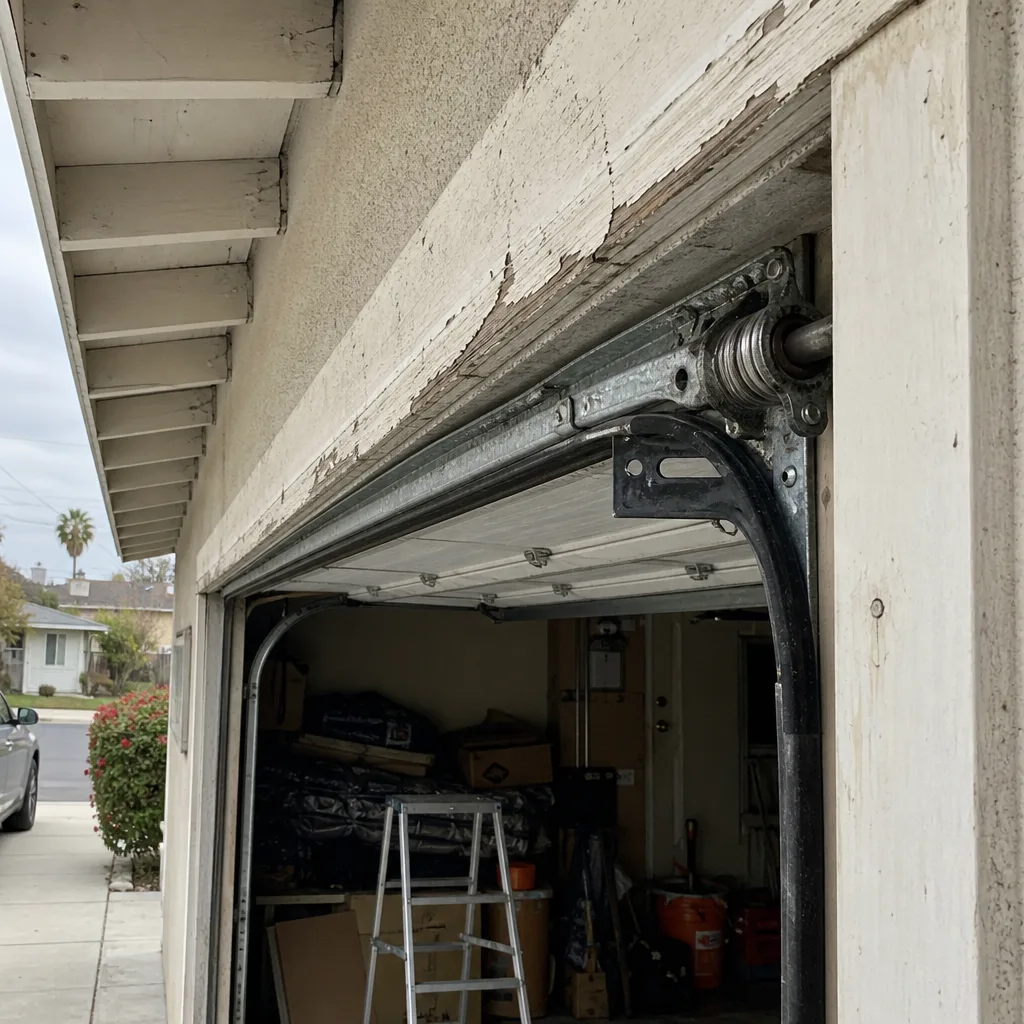 Before
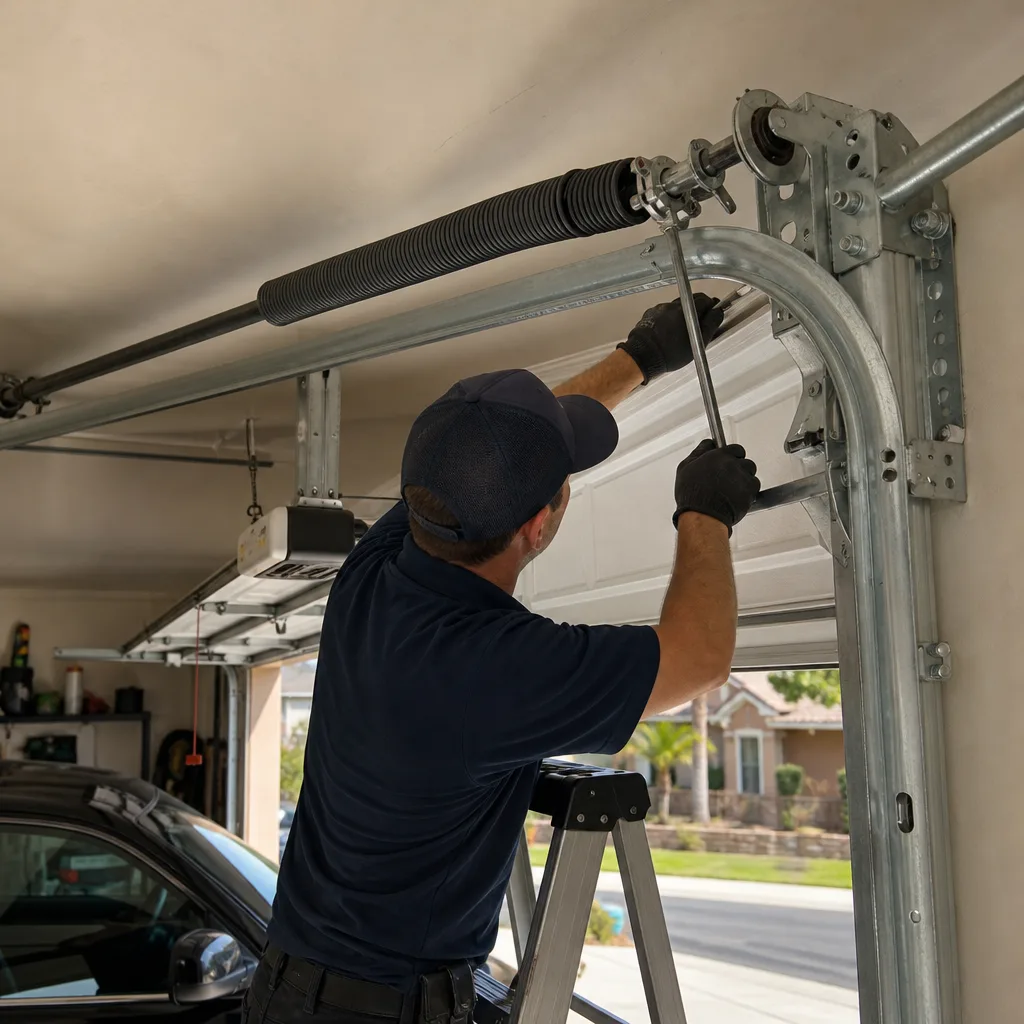 After
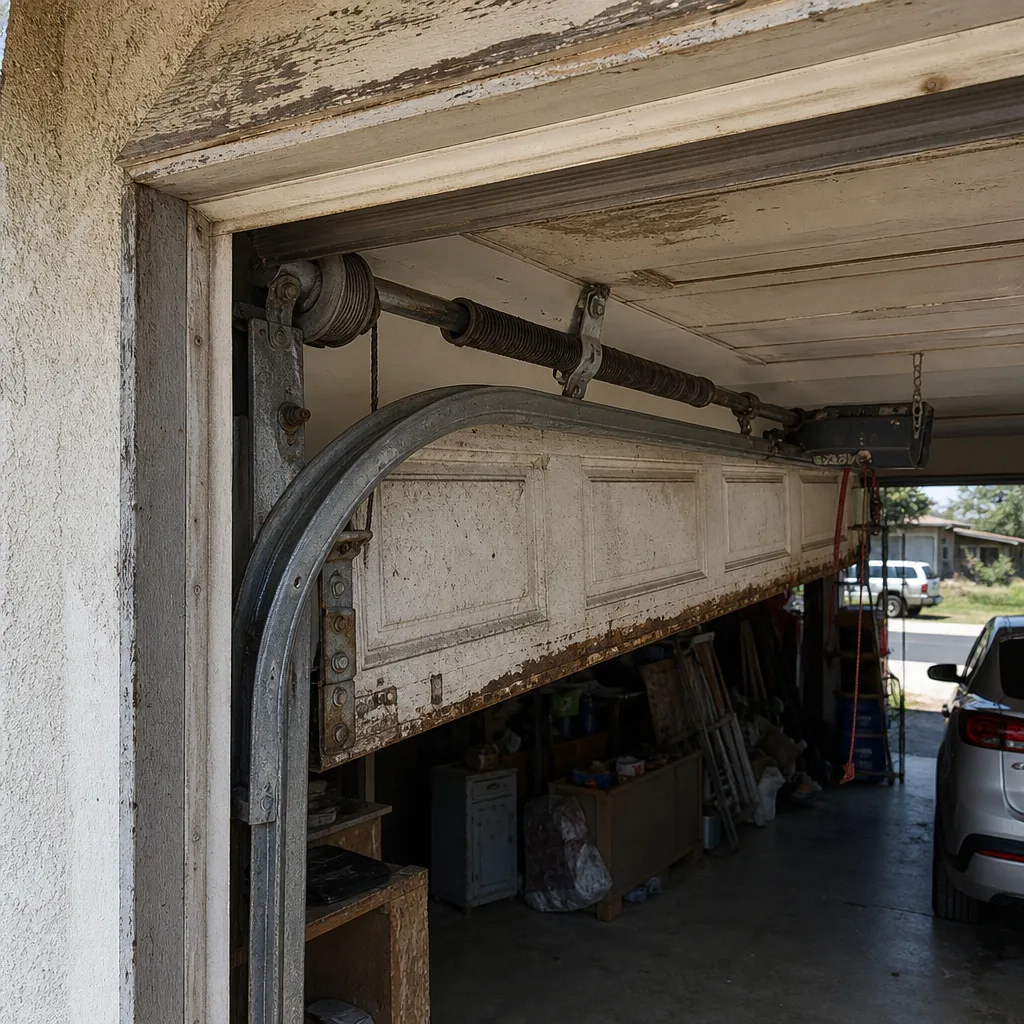 Before
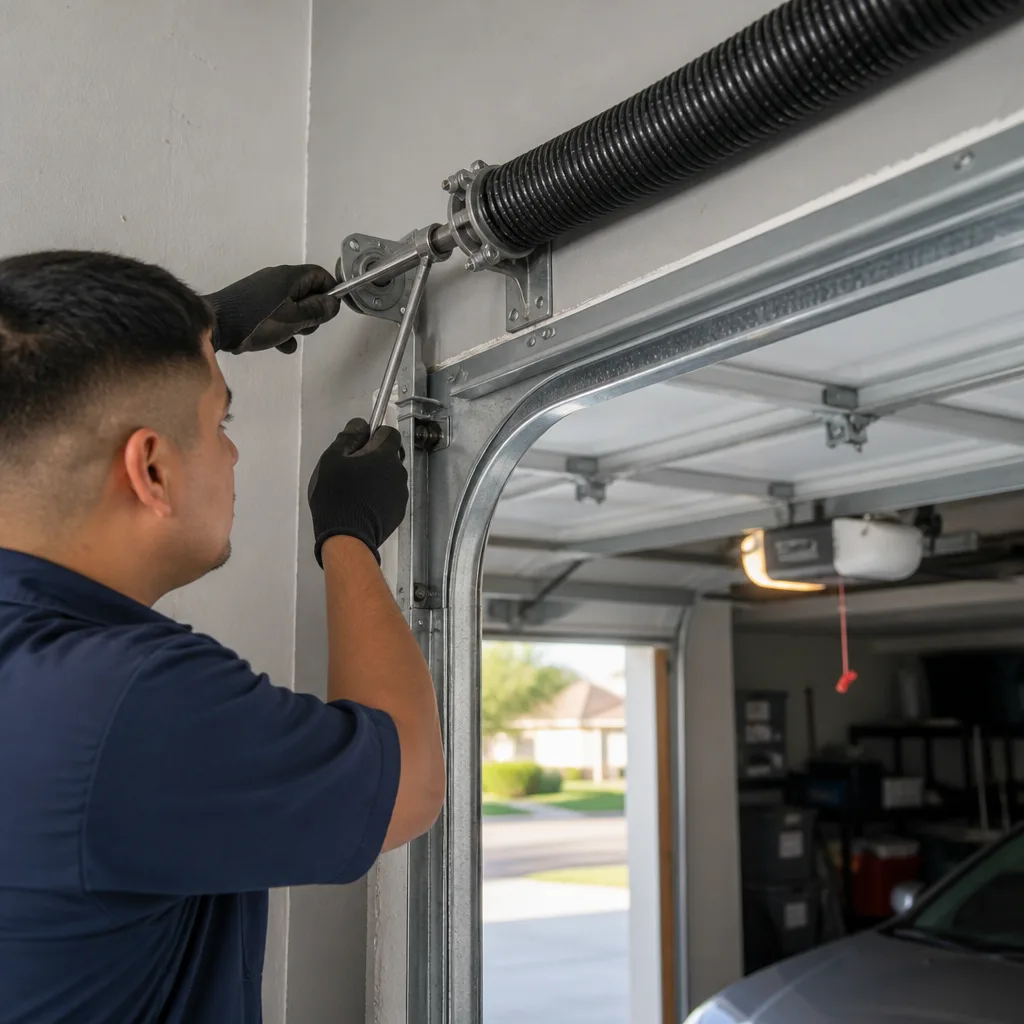 After
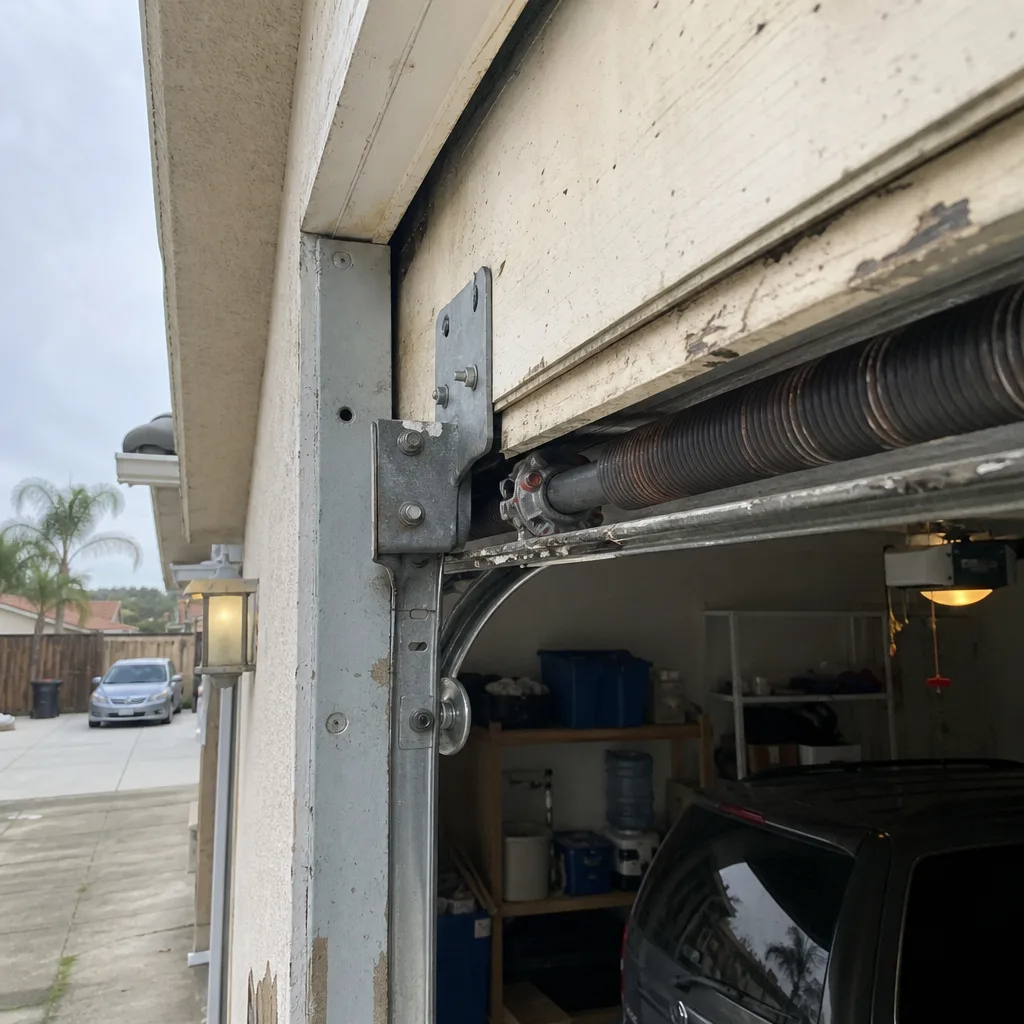 Before
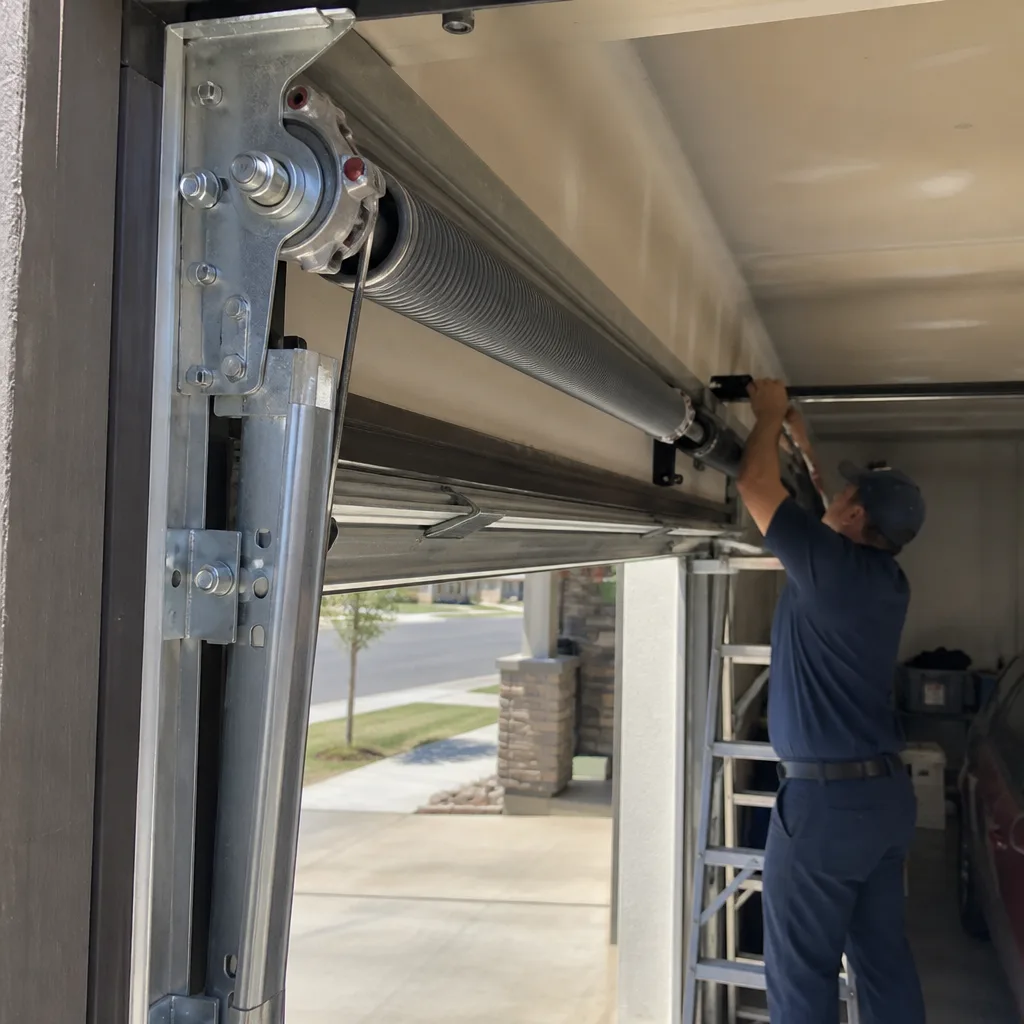 After